







Agates are often misidentified — not because they are rare, but because they don’t reveal themselves easily. Many rocks resemble agate at first glance, and many true agates look unremarkable on the outside.
Learning how to identify agate is not about quick tests or shortcuts. It’s about understanding how agates form, what that process leaves behind, and why certainty often comes only with time.
What Is an Agate?
An agate is a variety of chalcedony, a microcrystalline form of quartz. What makes agate distinct is not its chemistry alone, but its growth history.
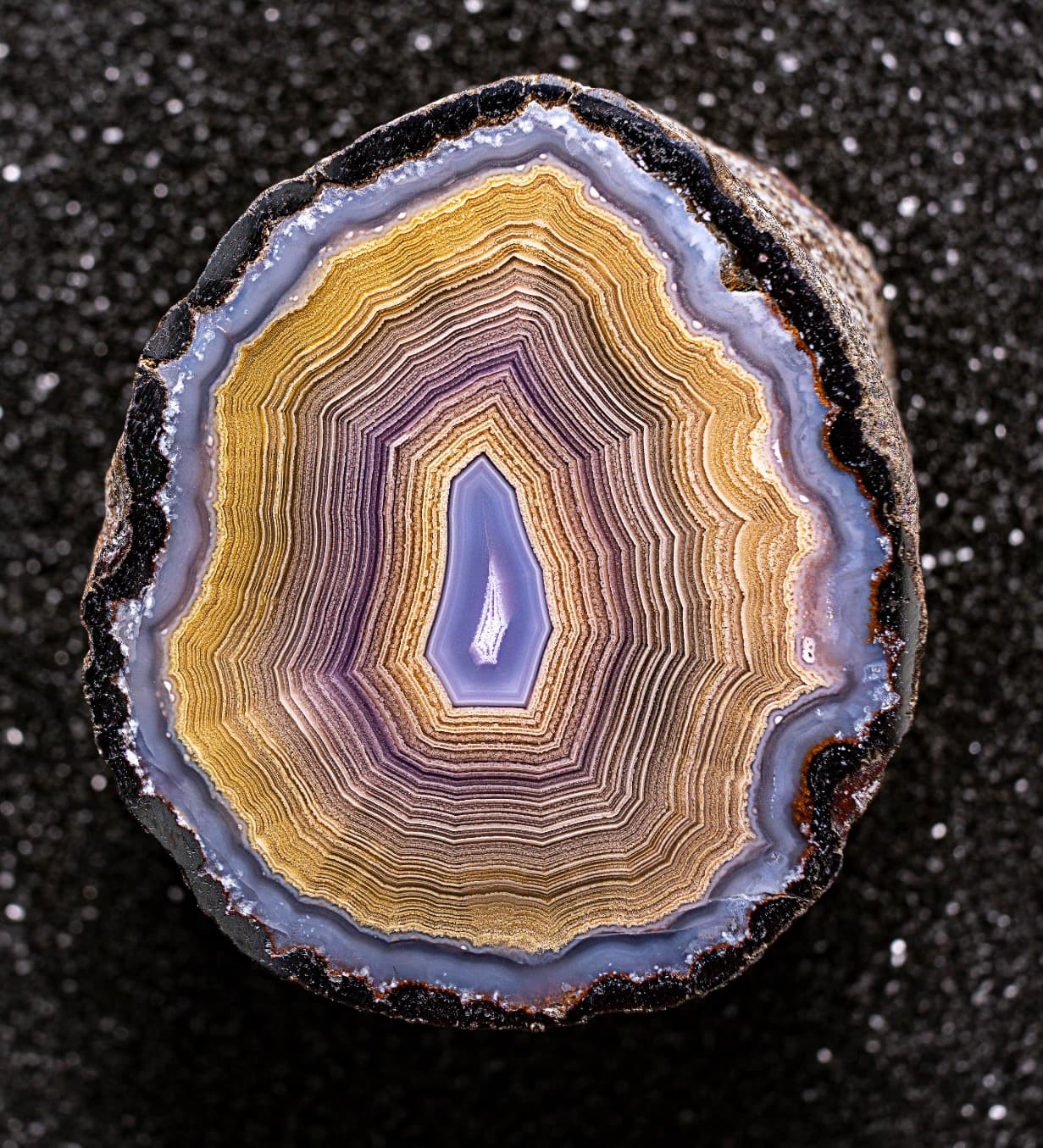
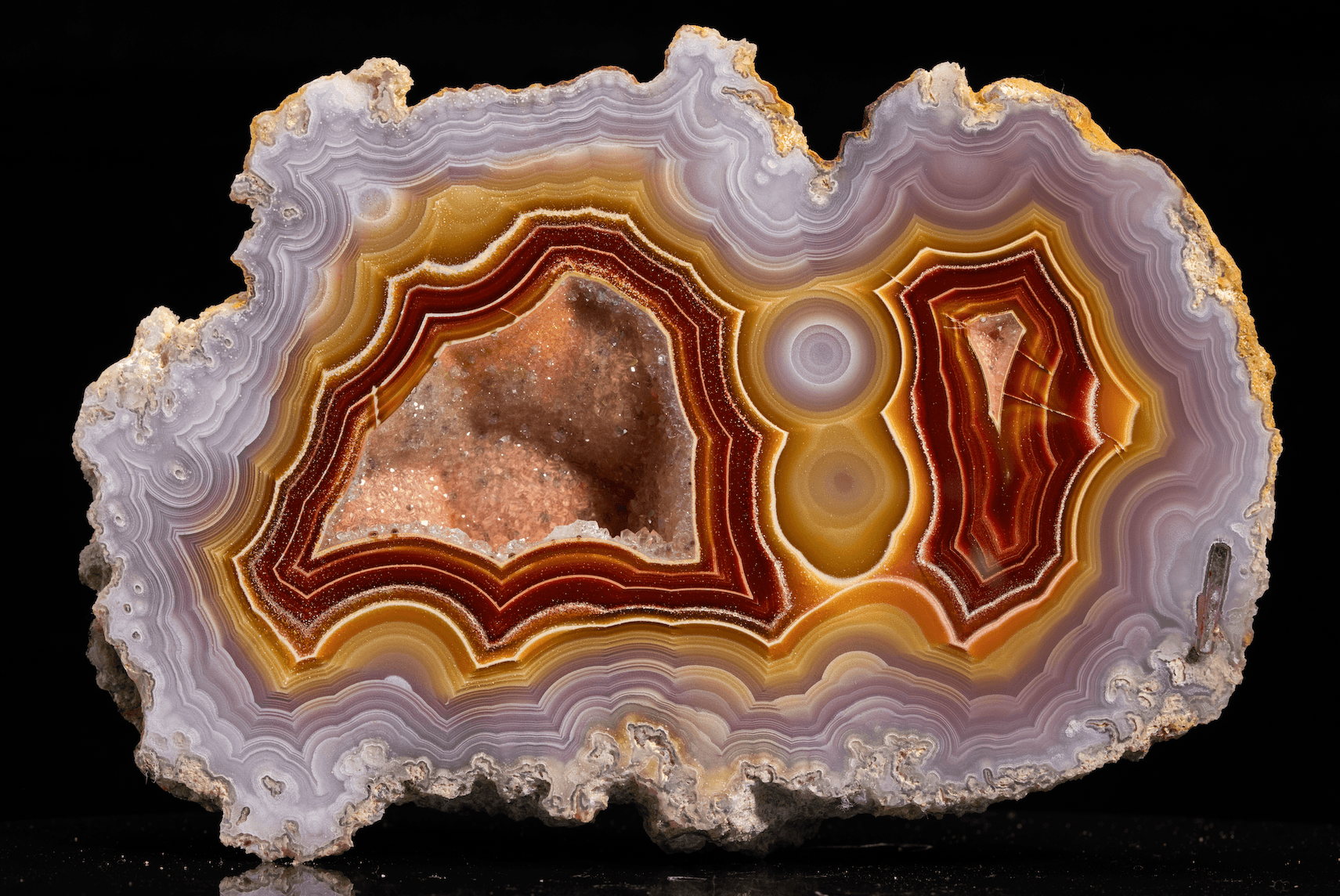
Agates form when silica-rich fluids slowly fill cavities in rock. As conditions change over long periods of time, silica is deposited in layers. These layers become the internal banding that defines true agate.
Not all chalcedony is agate — but all agate is chalcedony.
How Agates Usually Form: Nodules, Not Sheets
Most true agates form as nodules.
They grow inward inside rounded or irregular cavities rather than forming flat seams or continuous layers. Because of this nodular origin, agates often show:
Rounded or irregular shapes
A natural outer “skin”
Interiors that are completely hidden from view
This growth style is one of the most important clues in agate identification. Many silica-rich stones exist — very few grow this way.
The Key Traits That Suggest a Rock Is an Agate
Agate identification is never based on a single feature. It comes from several traits appearing together.
1. Internal Banding (The Most Important Indicator)
True agates display banding — layers formed by repeated stages of silica deposition. These bands often curve inward, following the shape of the original cavity.
Banding can be bold or subtle, colorful or nearly colorless, but it always reflects structured, layered growth over time.
Without banding, a stone is not considered a true agate.
2. Translucency (Often, Not Always)
Agates are often translucent, especially along thinner edges or bands. Light may pass through parts of the stone rather than stopping completely at the surface.
Translucency varies depending on thickness, mineral inclusions, and preservation, so it should be considered a supporting clue — not a requirement.
3. Dense, Smooth Texture
Agate has a dense, compact feel. Even when rough, surfaces often appear smooth rather than grainy. Broken areas tend to show clean, curved surfaces rather than crumbly or layered textures.
This reflects agate’s microcrystalline structure.
4. A Misleading Exterior
One of the most important lessons in agate identification is this:
The outside often tells you very little.
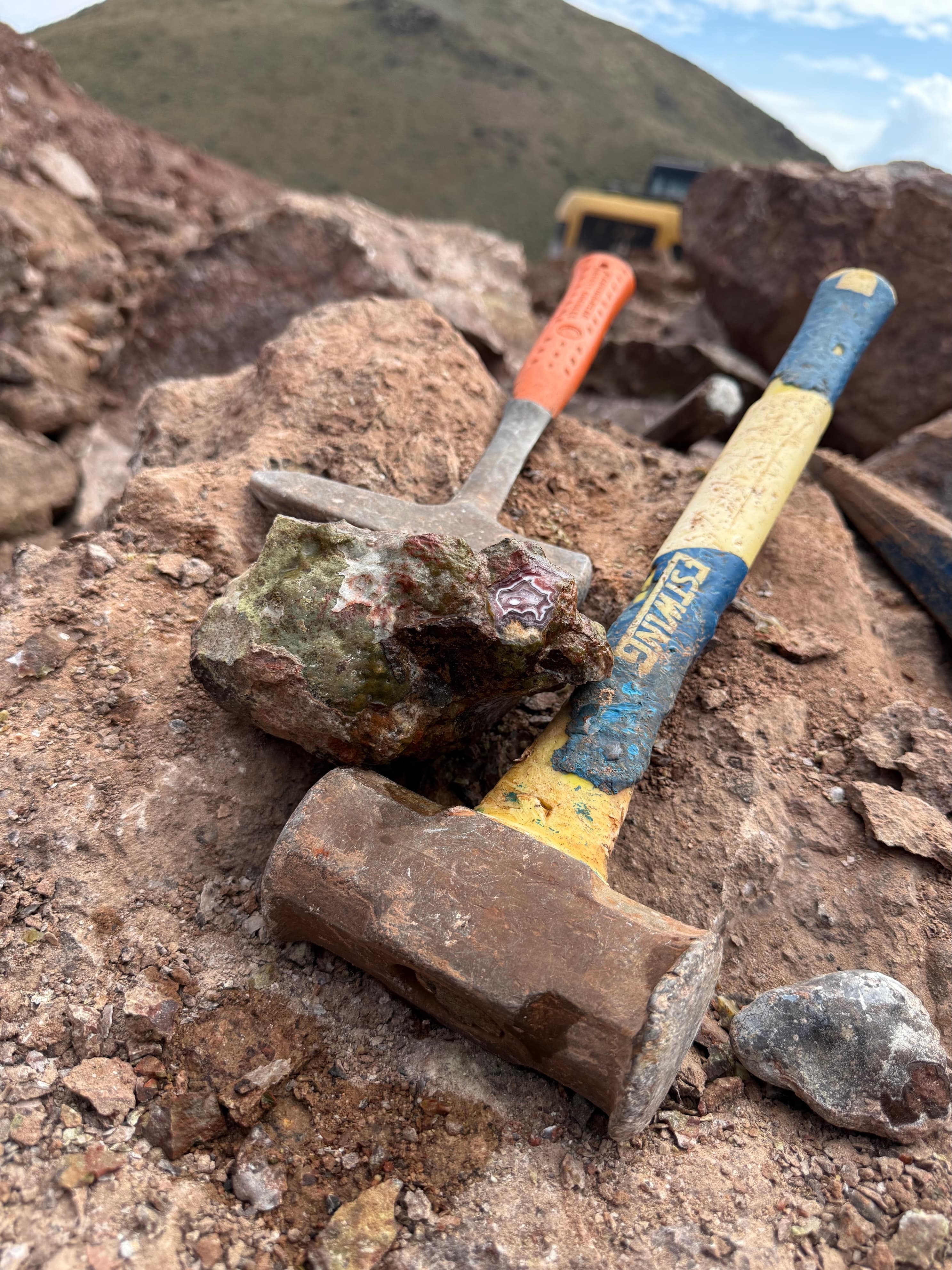
Many agates look dull, rough, or unremarkable externally. Some of the best agates come from nodules that showed almost no promise before being opened. Small windows or subtle hints may appear — but they are never guarantees.
This is why agates are difficult to identify with certainty before cutting.
Agate vs Jasper (Common Confusion)
Agate is frequently confused with jasper, since both are forms of chalcedony.
Agate: Banded, often translucent, typically nodular
Jasper: Opaque, massive, usually without banding
While related, they form differently and should not be grouped together casually.
Can You Truly Identify an Agate Before It’s Cut?
You can recognize the signs of agate.
You can build confidence with experience.
But absolute certainty usually comes only after the stone is opened.
This uncertainty is not a flaw — it’s part of what makes agates fascinating. They reward patience, observation, and respect for the process.
How Collectors Think About Identification
Collectors don’t stop at asking “Is this an agate?”
They look deeper:
How did it grow?
Do the bands show rhythm and balance?
Is the structure preserved or disrupted?
This way of seeing comes from studying many real specimens over time.
Learn by Seeing Real Examples
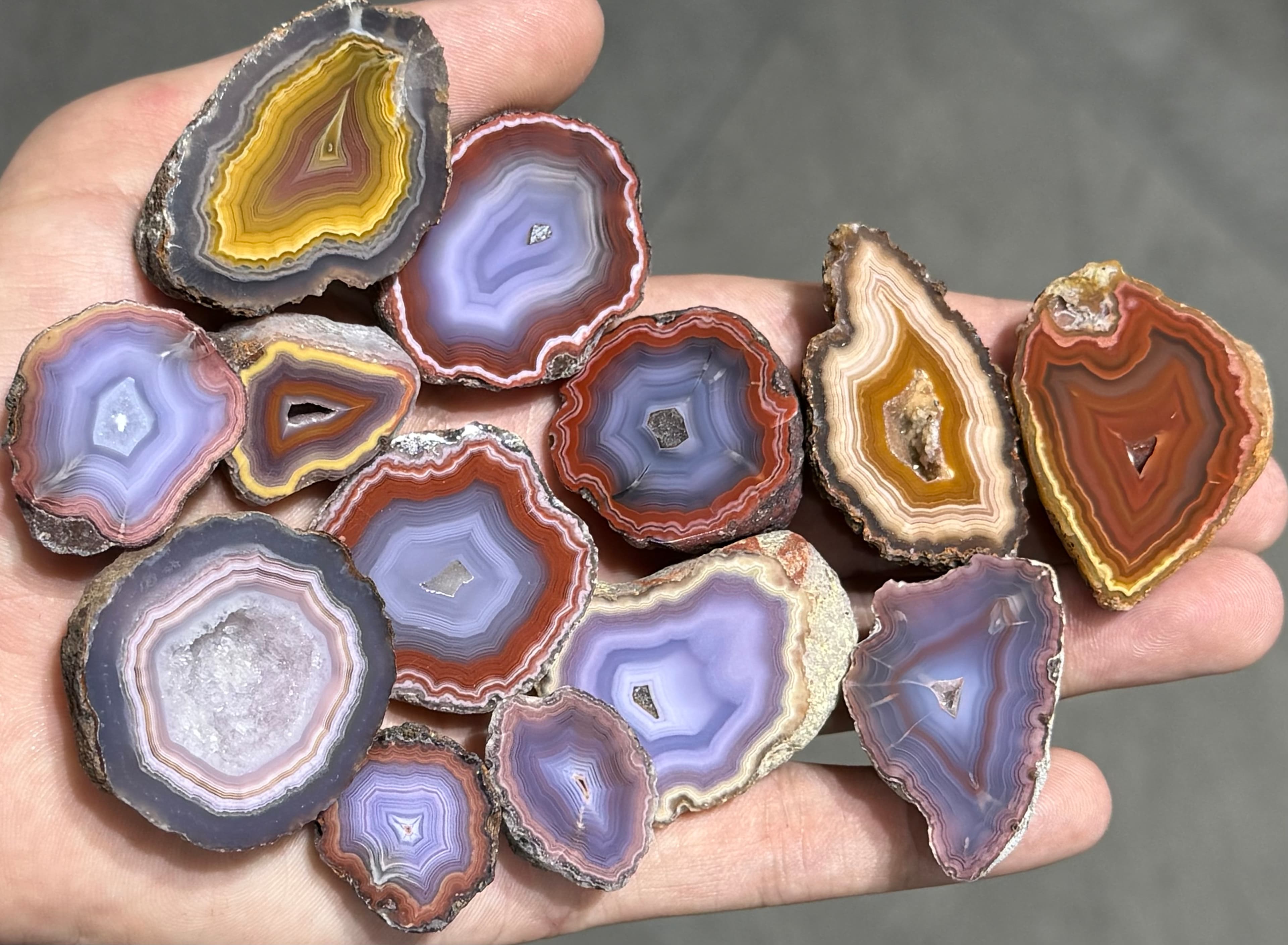
Seeing real agates side by side changes how you identify them.
Explore our collection to study genuine specimens and develop a trained eye.
Over time, patterns become familiar, mistakes become instructive, and identification becomes more intuitive.
Final Thought
Identifying agate isn’t about being right every time.
It’s about learning how to see.
Agates don’t announce themselves. They reveal themselves gradually — and only to those willing to look carefully and accept uncertainty.
That difficulty is not a barrier.
It’s the point.