








Mexican Agates: A Collector’s Guide to the World’s Most Complex Banded Agates
Mexican agates occupy a unique and highly respected position in the world of mineral collecting. Renowned for their intense color saturation, complex internal architecture, and geological diversity, these agates are widely regarded as some of the finest banded agates ever discovered. Unlike many commercial agate sources, Mexican deposits are defined by unpredictability—both in appearance and in yield—making truly exceptional material increasingly rare.
For serious collectors, Mexican agates are not decorative stones chosen for surface beauty alone. They represent singular geological events, deposits that often exhaust quickly, and color combinations that may never be repeated once a pocket is depleted. This guide explores what makes Mexican agates different, why they are so rare, and how experienced collectors evaluate them.

What Makes Mexican Agates Different
Most of the world’s well-known agates form in relatively uniform volcanic environments. Mexican agates, by contrast, commonly form within hard andesite host rock under complex volcanic and hydrothermal conditions. These environments are far less stable, leading to dramatic variation in silica deposition, chemistry, and crystal growth.
This geological complexity directly influences the internal character of Mexican agates, often resulting in:
Exceptional color saturation
Sharp band separation
Strong internal depth and parallax
Unusual structural features
These qualities are never guaranteed. In fact, most nodules recovered from Mexican deposits fail to produce meaningful agate formation at all. What elevates Mexican agates is not consistency, but the rare moments when conditions align perfectly.
Why Mexican Agates Are So Rare
One of the most misunderstood aspects of Mexican agates is yield. Externally, many nodules appear promising. Internally, most are not.
In real-world cutting:
A high percentage of nodules appear colorless or lack true agate formation entirely.
Fractures frequently destroy the entire face of an otherwise promising piece once it is opened.
Color may appear only in a few isolated bands, often without full saturation or continuity.
Entire pockets can be exhausted without producing a single piece of collector-quality material.
These outcomes are rarely discussed outside of experienced cutting circles, yet they define why exceptional Mexican agates are so scarce. Every finished collector-grade piece represents not only geological rarity, but also significant material loss along the way.

Major Types of Mexican Agates
Mexico hosts a wide range of agate deposits, each shaped by its own chemistry, host rock, and formation history. While many locations exist, only a handful consistently produce material of international collector interest.

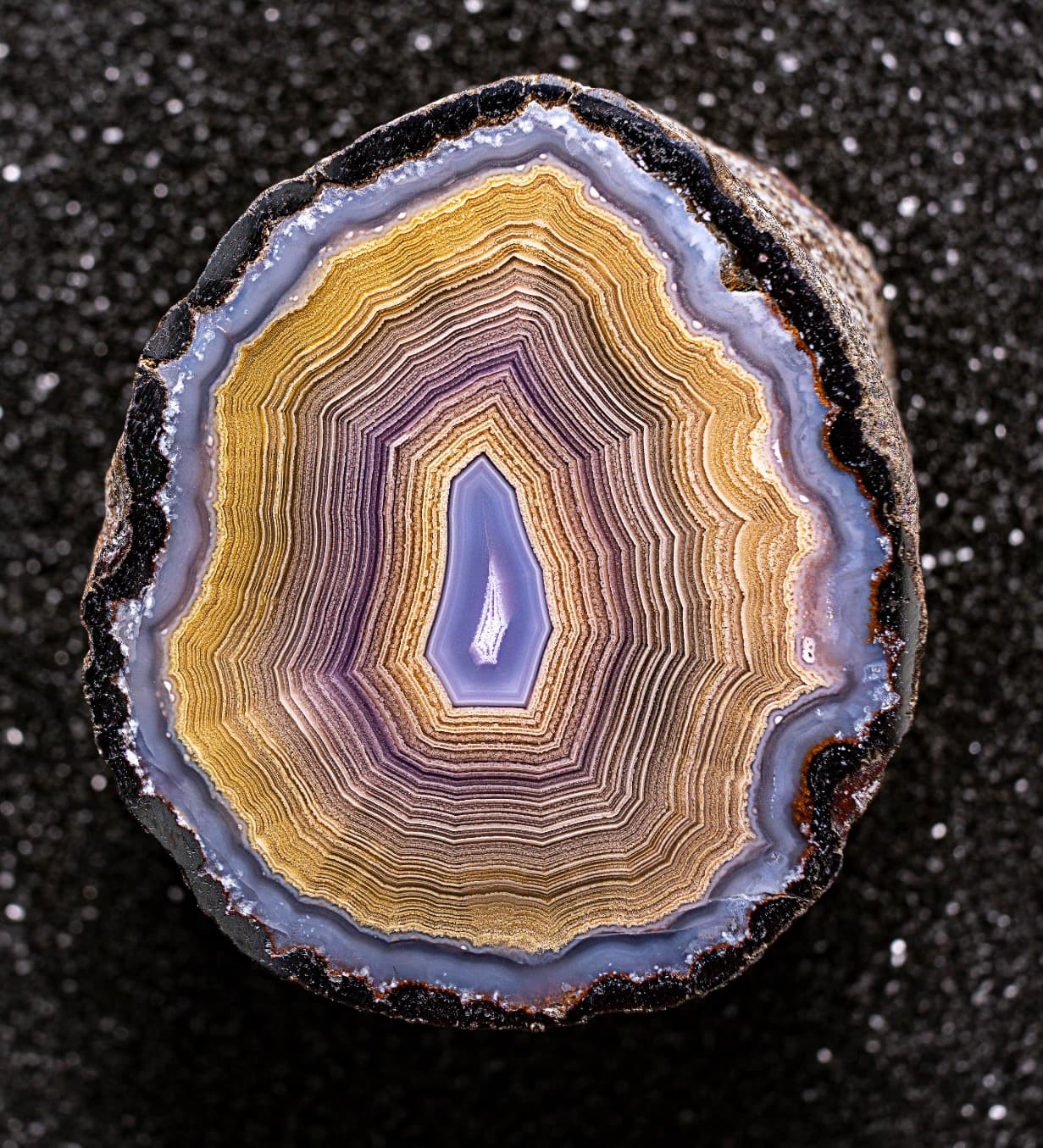
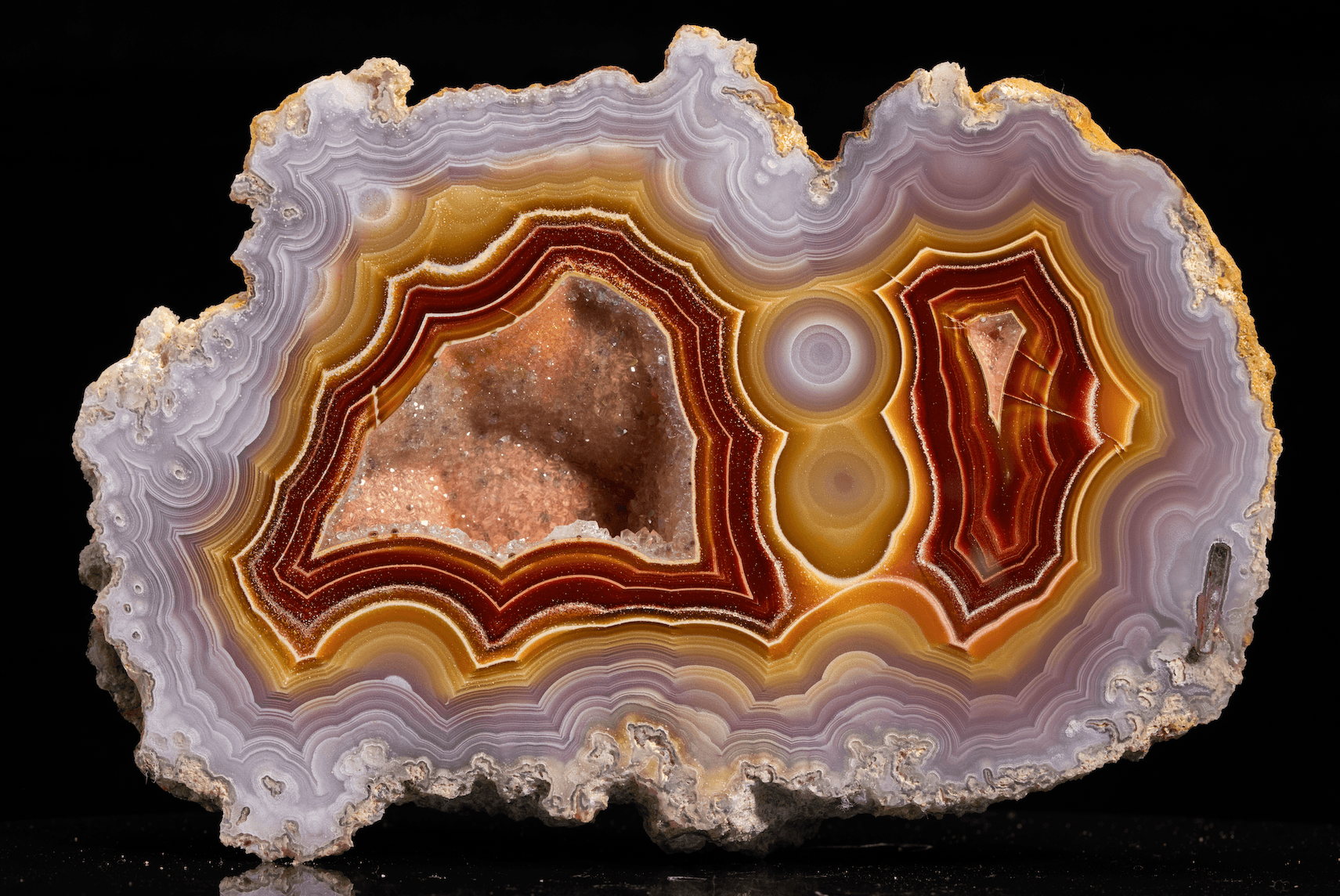
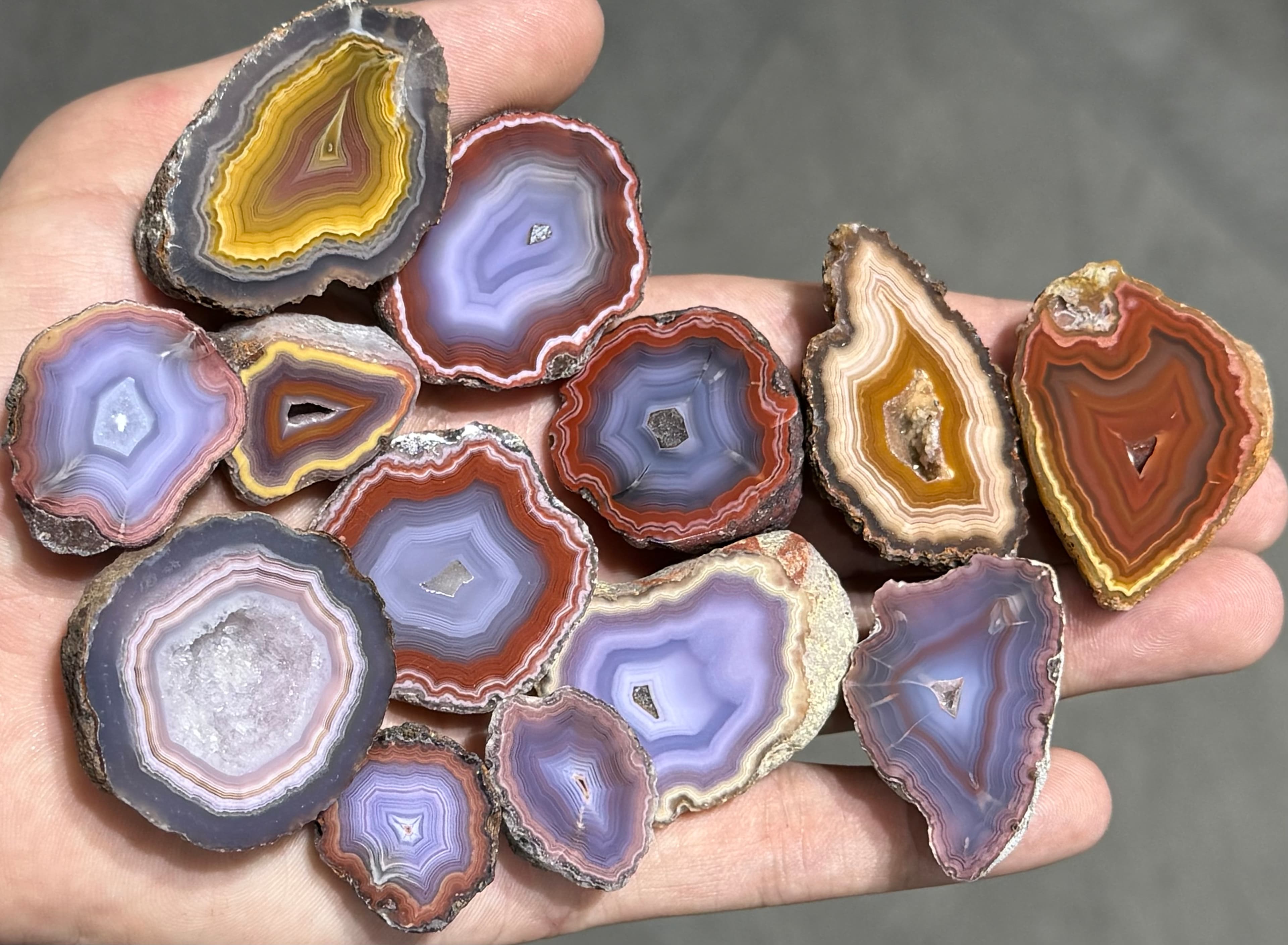
Laguna agates are renowned for their vivid reds, pinks, yellows, and, in rare cases, soft lavender tones. High-grade examples display tight concentric banding, strong color separation, and exceptional clarity. When fully developed, Laguna agates are widely considered among the finest banded agates ever discovered and are increasingly difficult to replace as deposits become exhausted.
Coyamito Agate

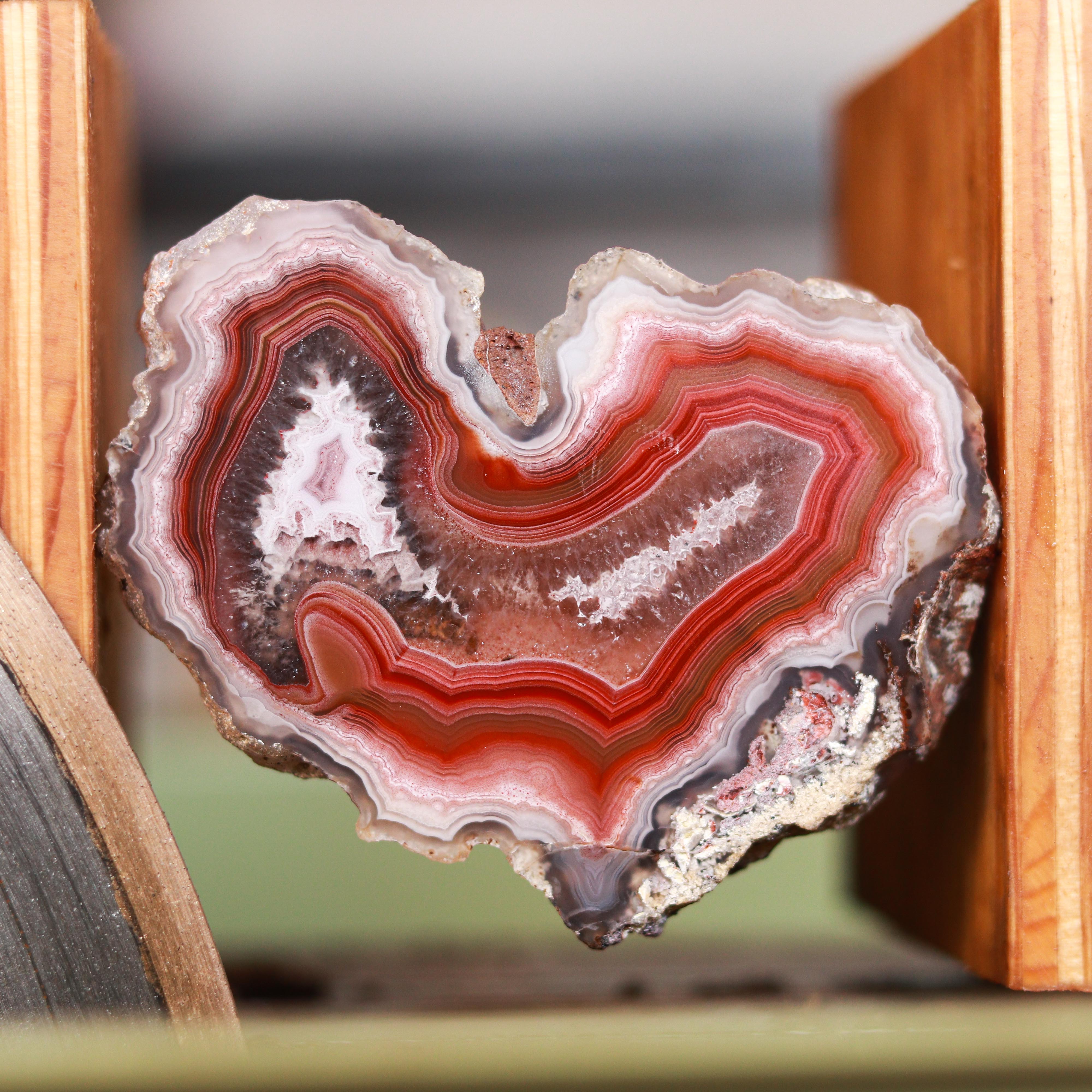
Coyamito agates are known for their extraordinary depth of color, dramatic internal contrast, and wide range of color combinations. In addition to classic banded structures, Coyamito deposits are also capable of producing remarkable pseudomorph formations, where mineral replacement creates complex internal textures rarely seen in agates elsewhere. Certain pockets have yielded structures and color interactions unique on a global scale.
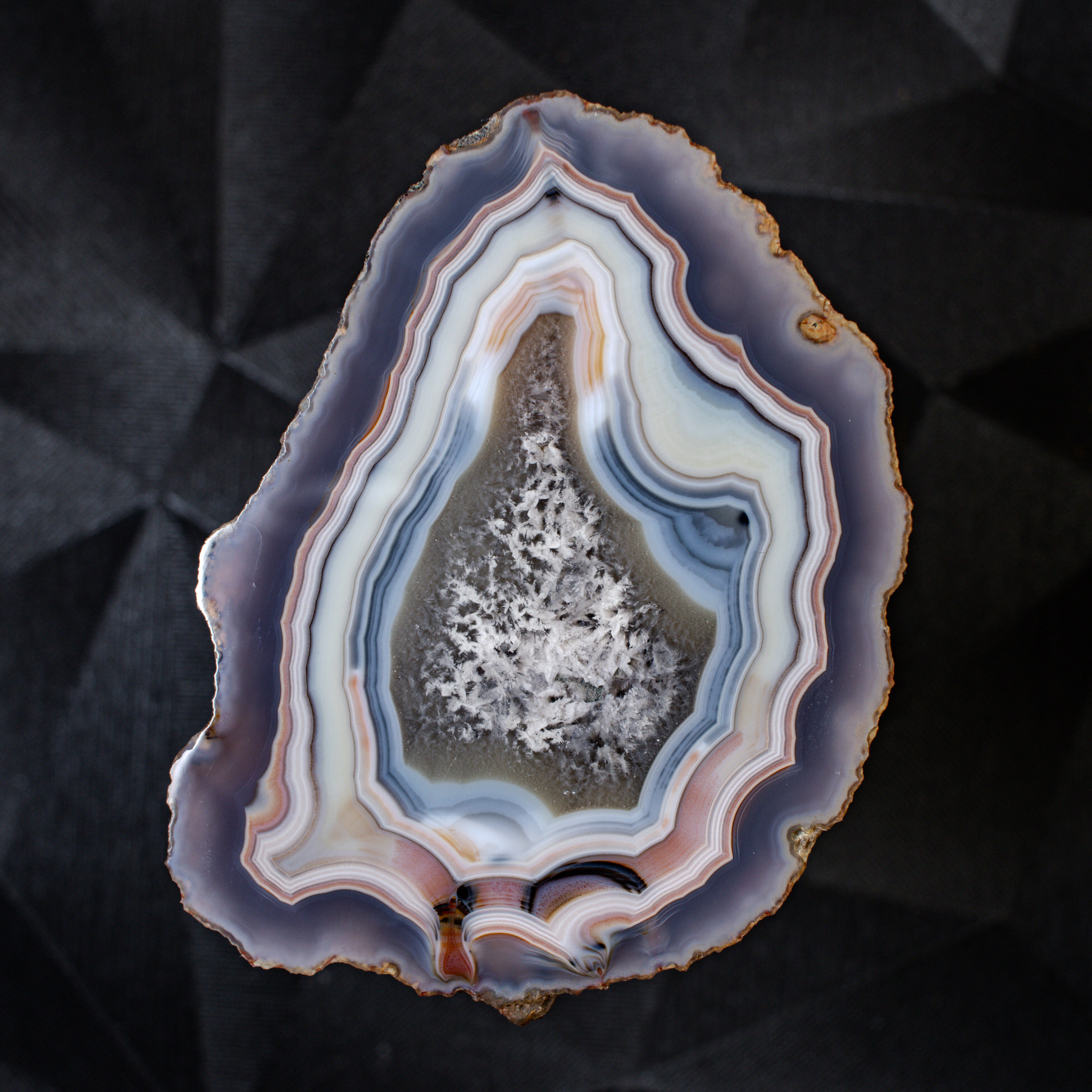
Moctezuma agates are especially valued for their distinctive green tones and refined pastel color palettes. Rather than relying on intense contrast, these agates often present balanced banding, subtle transitions, and elegant internal movement. High-quality Moctezuma material appeals strongly to advanced collectors who value structure and harmony.
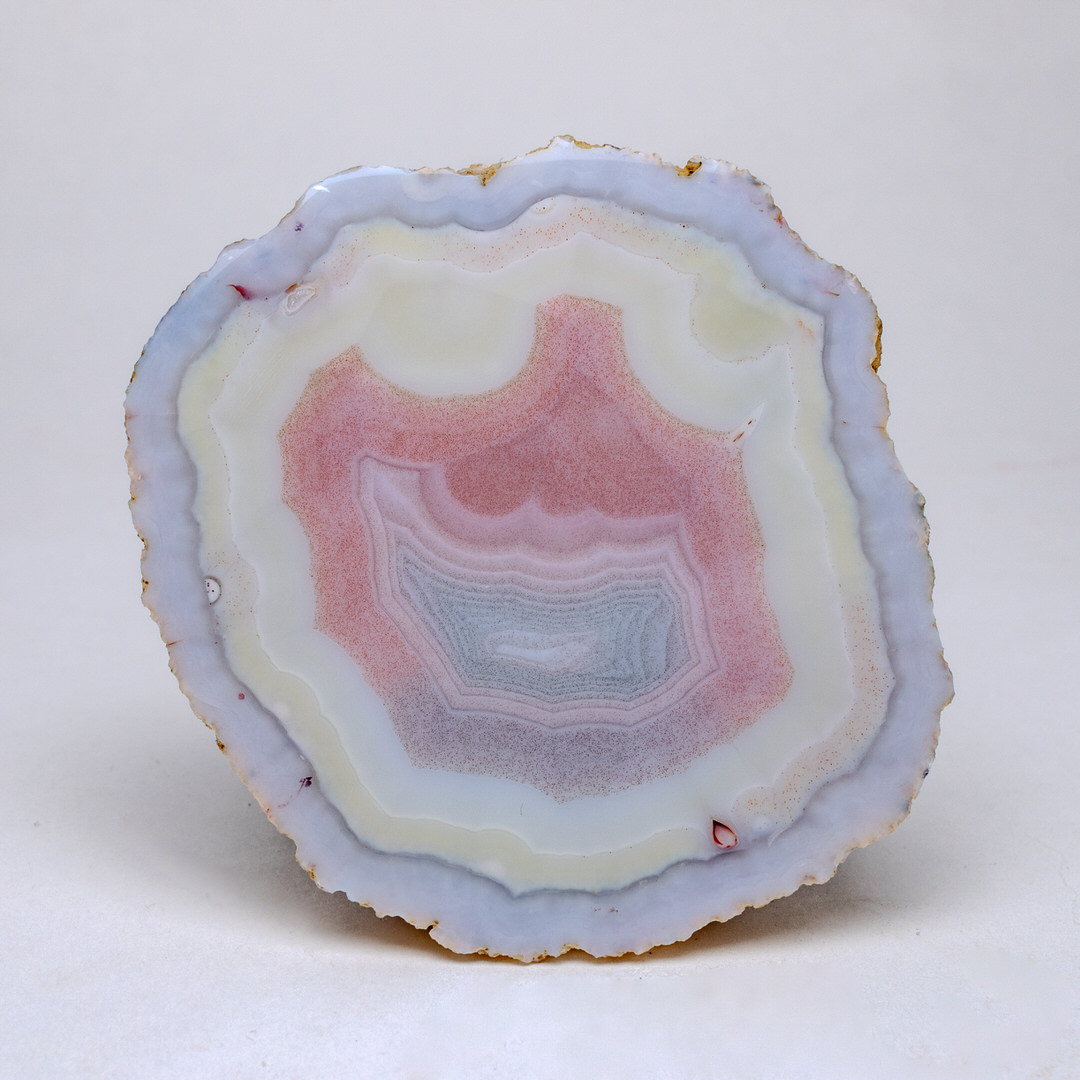
Loma Pinta agates are best known for their beautiful pink hues and characteristic green outer husk. Select pieces reveal unexpected internal complexity, with varied and sometimes unusual color combinations. While production is inconsistent, exceptional Loma Pinta agates offer a striking contrast between exterior appearance and internal structure.
The Reality of Cutting Mexican Agates
Cutting Mexican agates is defined by uncertainty. Promising nodules can require significant effort to extract and prepare, only to reveal fractures, incomplete formation, or minimal color once opened. Even when strong color appears on one face, it may not carry through the entire stone.
Collectors rarely see:
The volume of material discarded
The labor required for extraction
The losses incurred during cutting and trimming
This reality is precisely why finished, collector-grade Mexican agates command such respect. Each successful piece represents hundreds of unsuccessful attempts.
How Collectors Evaluate Mexican Agates
Experienced collectors evaluate Mexican agates using a combination of visual, structural, and geological criteria. Color alone is never sufficient.
Key evaluation factors include:
Band tightness and consistency
Color purity and separation
Clarity and translucence
Parallax and internal depth
Structural integrity and balance
The finest pieces combine multiple qualities without compromise. These agates are rarely released casually and often become long-term collection anchors.

Close up of Coyamito agate showing extremely tight banding and layered internal structure
Why Mexican Agates Dominate Serious Collections
Mexican agates have earned their reputation through performance over time. As deposits become exhausted and access becomes more limited, truly exceptional material continues to disappear from the market. Unlike mass-produced agates, Mexican collector-grade pieces cannot be replicated or replaced.
This combination of scarcity, complexity, and geological uniqueness has made Mexican agates a cornerstone of advanced private collections and museum holdings worldwide.
Where to Buy Authentic Mexican Agates
Because quality varies so dramatically, sourcing Mexican agates requires experience and transparency. Many online listings emphasize color while ignoring fractures, incomplete formation, or internal limitations.
Authentic collector-grade Mexican agates should be:
Properly cut to reveal internal structure
Accurately described, including limitations
Documented with real, unfiltered photography
Backed by provenance and direct experience
Understanding these differences is essential for collectors seeking meaningful pieces rather than short-lived visual appeal.
Final Thoughts
Mexican agates are not defined by volume or convenience. They are defined by rarity, geological complexity, and the patience required to uncover them. For collectors willing to look beyond surface beauty, these stones offer an unmatched window into the forces that shape the Earth over immense spans of time.
This guide serves as a foundation for deeper exploration into individual Mexican agate types, cutting realities, and collector evaluation—topics that deserve careful attention and honest discussion.