








What Are Agates?
Agates are one of nature’s most captivating creations — formed slowly over millions of years inside volcanic rock. These stones begin their lives in hollow cavities, where mineral-rich water deposits tiny layers of silica. As time passes, those layers build up, eventually crystallizing into the colorful bands we recognize as agate.
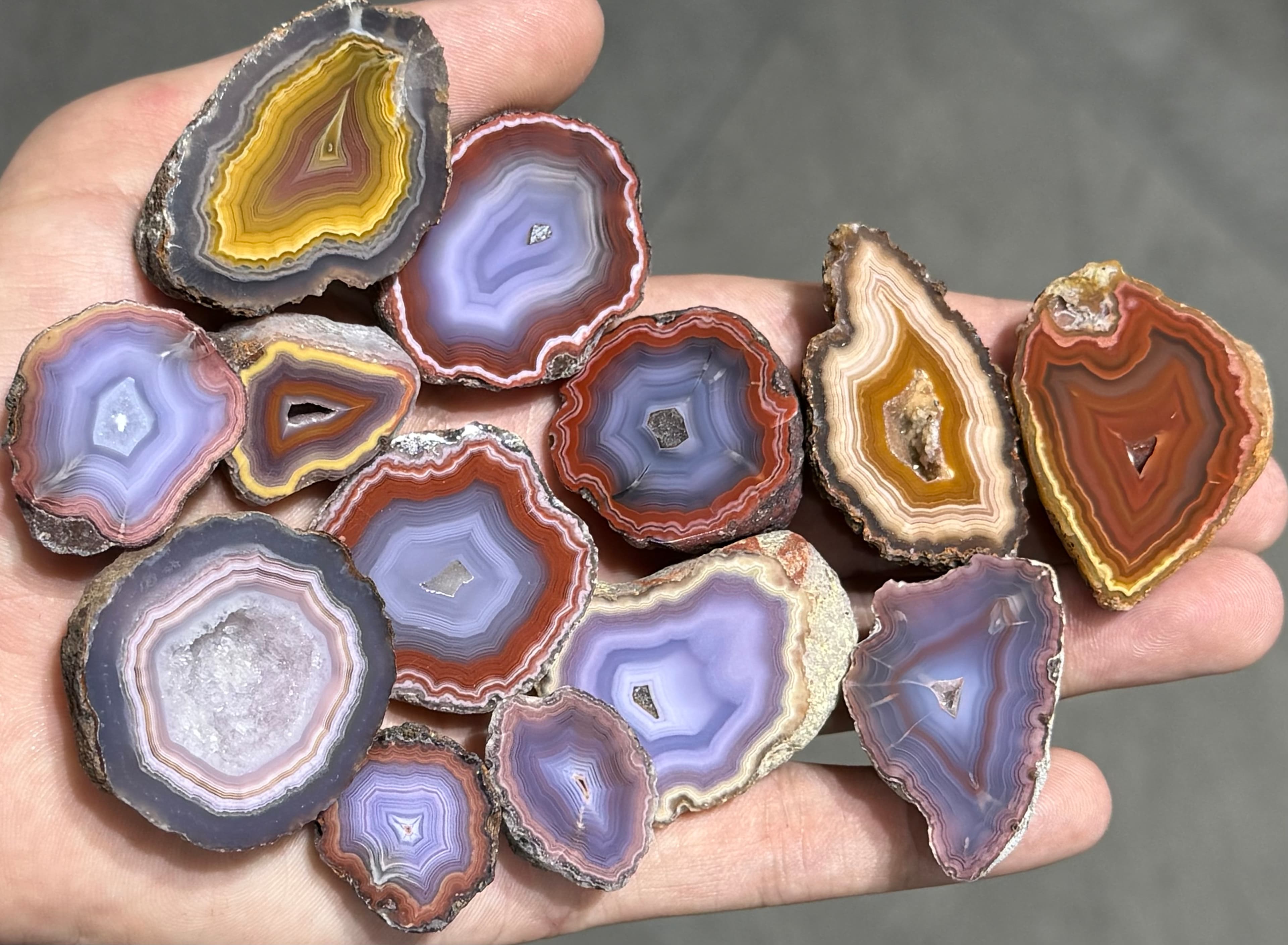
Each agate tells its own story. The vivid colors and patterns come from trace elements like iron, manganese, and potassium — each influencing the final look. No two are ever alike, which is what makes agates so exciting for collectors, jewelers, and geology lovers.
Technically, agate isn’t a single mineral but a variety of banded chalcedony — a fine-grained form of quartz made of microscopic crystals. Many also include other minerals and water trapped inside, adding even more complexity to their structure.
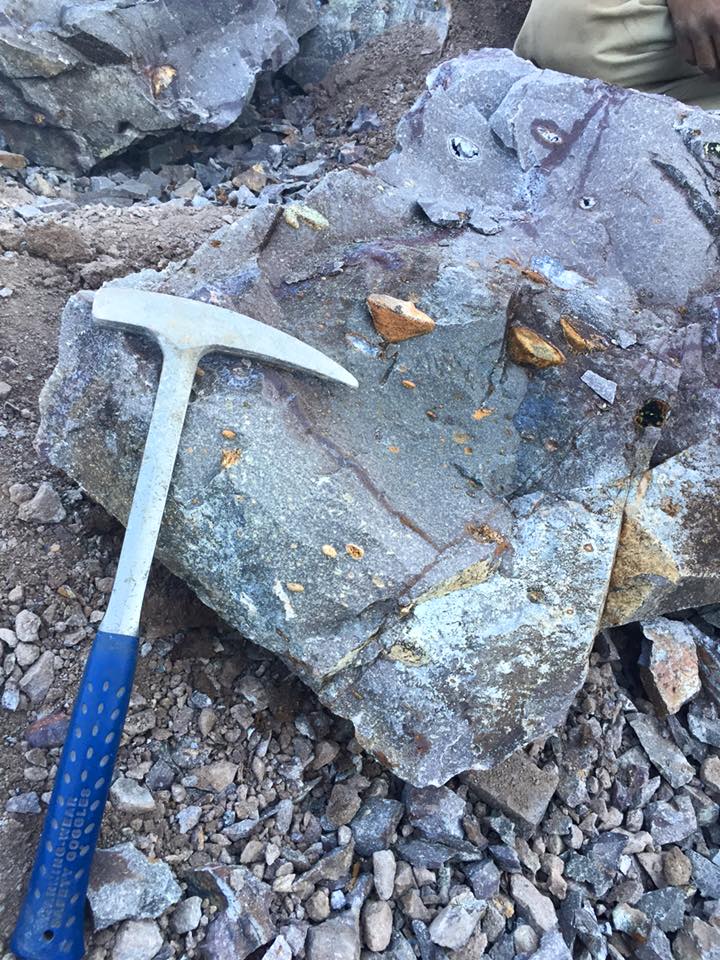
Agate nodules embedded in hard andesite host rock, awaiting extraction.
How They Form: The Science Behind the Beauty
At its core, agate is made of silicon dioxide (SiO₂), the same chemical compound that forms quartz. What sets agates apart is their banding — those rings, waves, or stripes that develop as silica deposits settle in stages. Shifts in temperature, pressure, pH, and trace elements change the width, color, and clarity of the bands as they form.
Key traits:
Composition: Primarily silicon dioxide, often with inclusions and trace elements.
Formation: Grows inside rock cavities, typically in volcanic environments.
Appearance: Known for their banded structure, vivid colors, and intricate internal designs.
The elements involved in formation also shape the colors:
Iron: brings reds, oranges, and yellows.
Manganese: gives soft purples and pinks.
Potassium: adds whites and warm yellow tones.
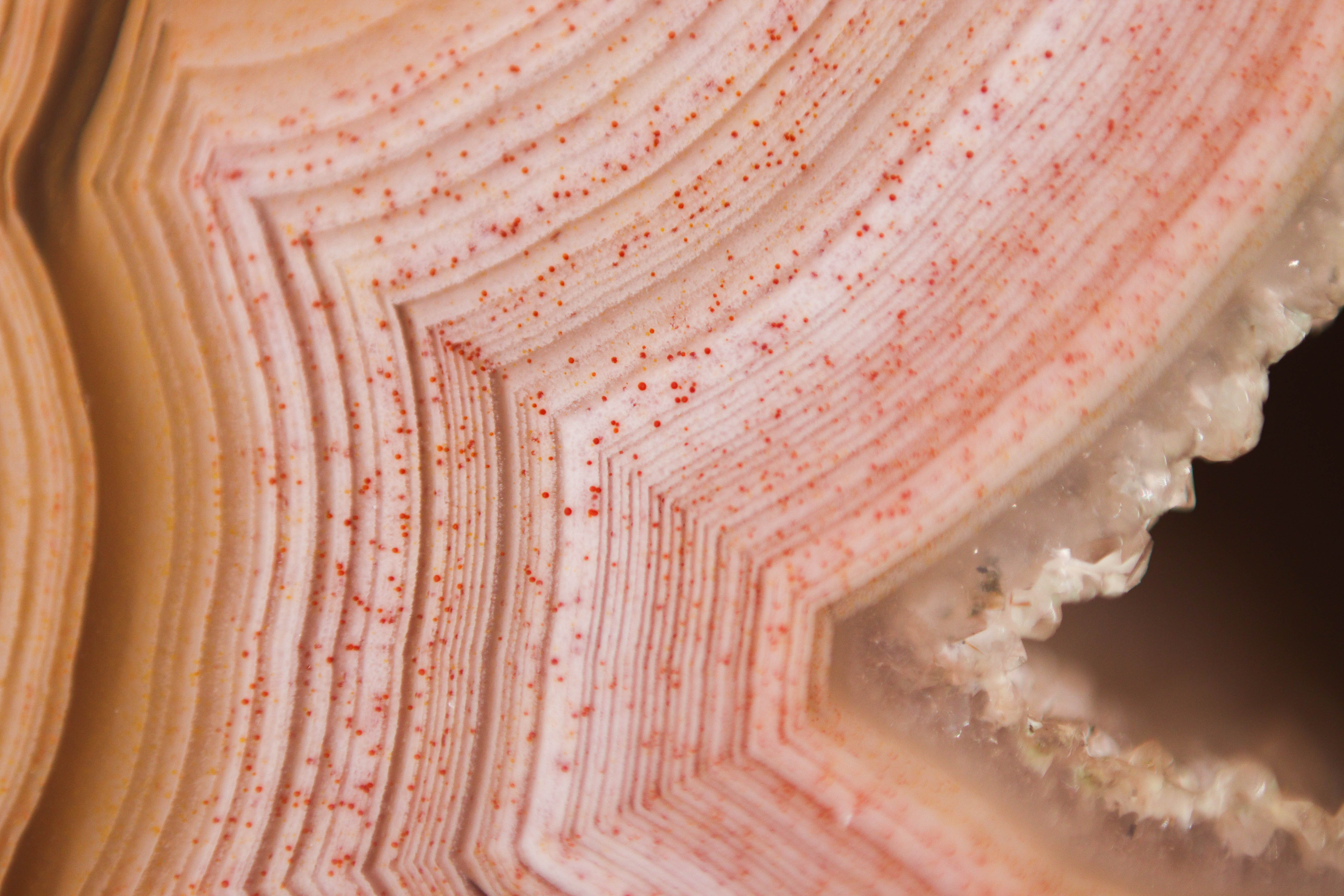
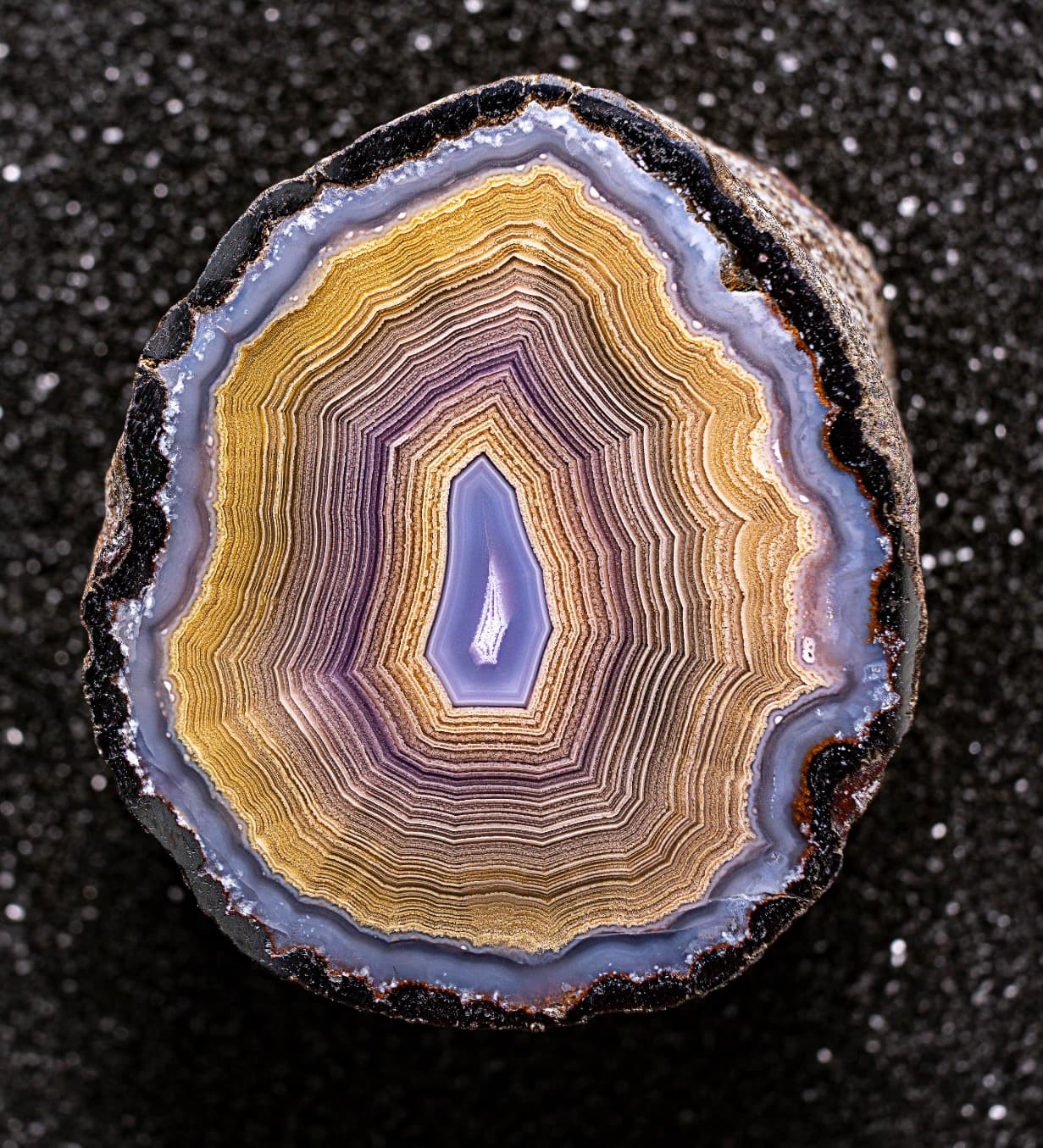
Macro shot of a Laguna Agate showing tight banding and trace element inclusions.
Why Agates Stand Out
What makes agates truly special is how rare the finest ones are. Most agates found in nature are dull or gray — useful in industrial settings for grinding tools or lab instruments, but not visually striking. The breathtaking, gem-quality agates — the ones with rich color and perfect banding — are rare exceptions.
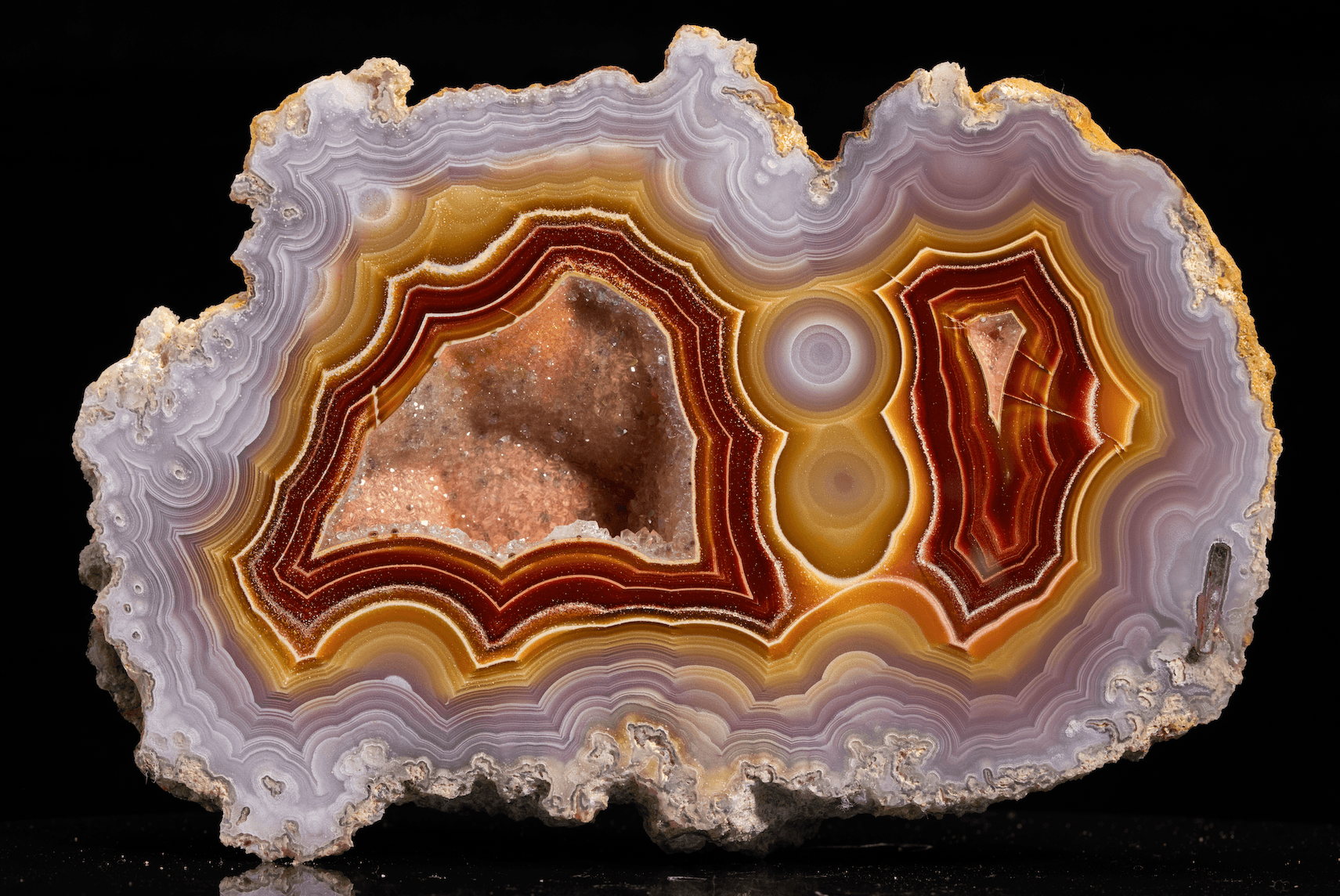
Examples like Laguna and Coyamito agates from northern Mexico are world-renowned. Their explosive colors and intricate formations make them some of the most sought-after agates on Earth. These pieces aren’t just stones — they’re geological works of art.
Today, top-tier agates are cut and polished into striking one-of-a-kind jewelry — rings, pendants, and display pieces that highlight their natural beauty. But whether kept in a collector’s case or worn as a centerpiece, they always hold a deeper story — one written by time, chemistry, and chance.