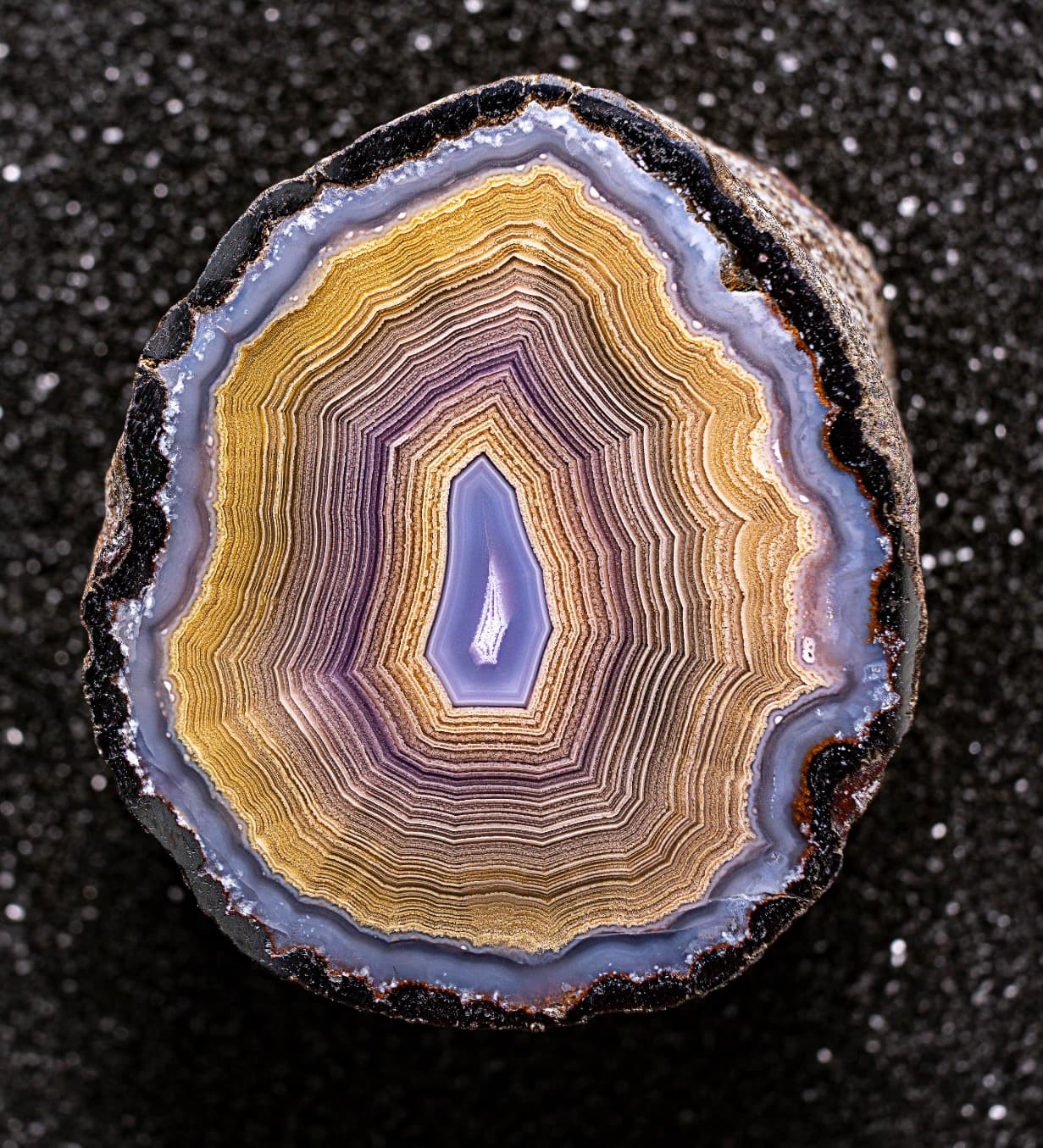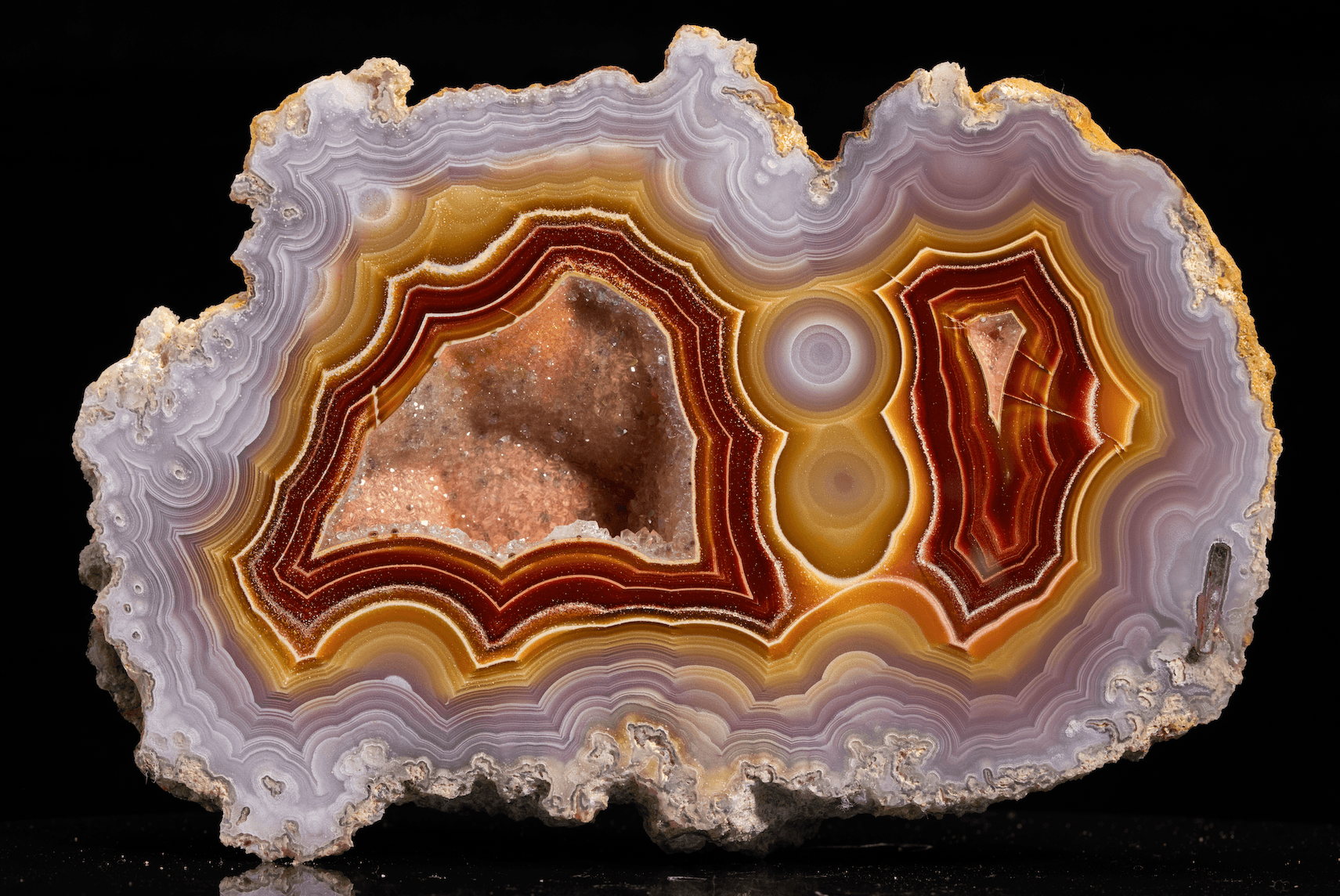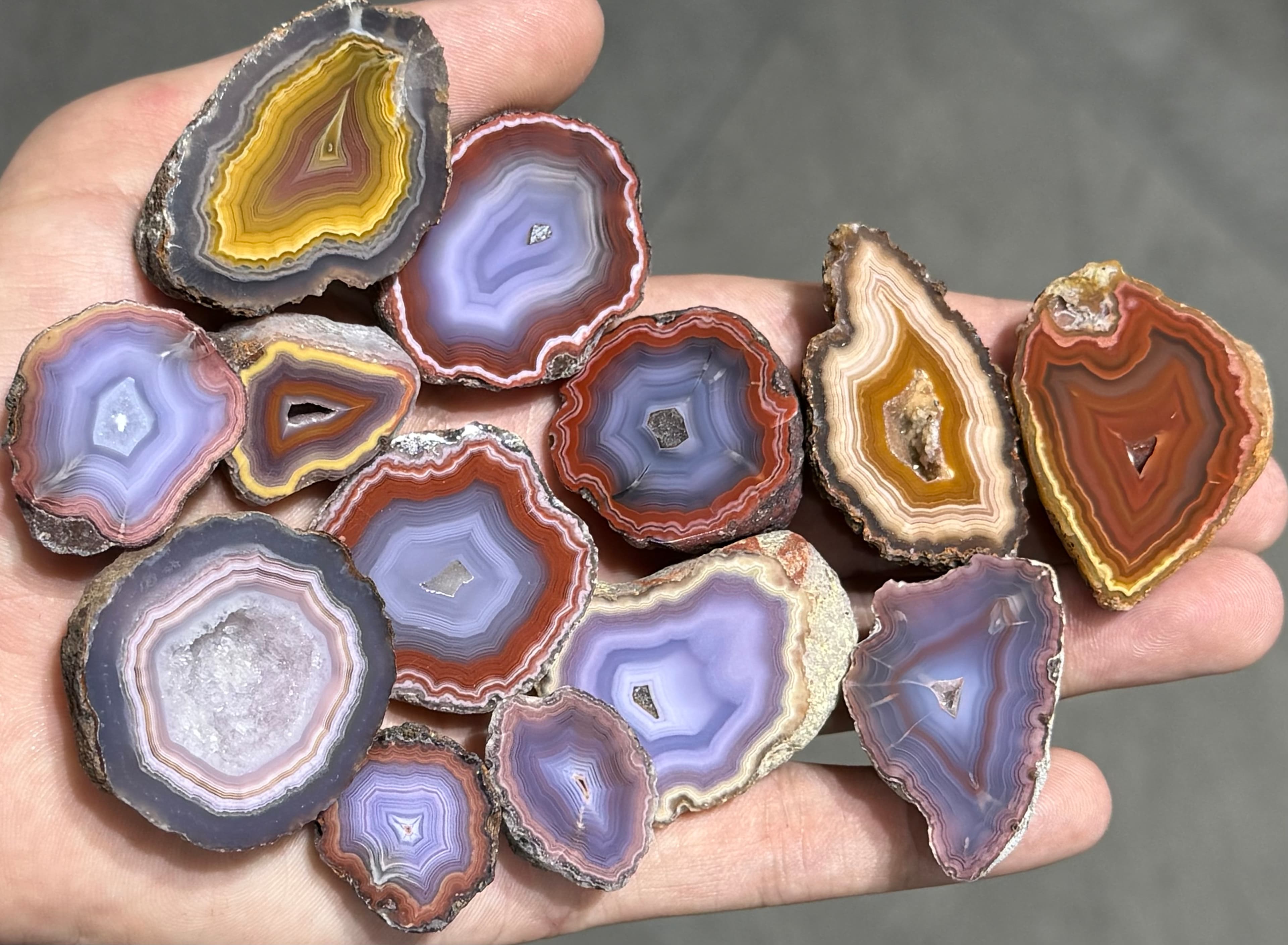









When people first discover agates, they often notice the color, banding, and beauty. What many don’t realize is that each agate is more than a decorative stone. It is a natural record of time, formed quietly within volcanic landscapes and preserving moments that unfolded over millions of years.
Agates begin their story in fire. Long ago, volcanic eruptions sent rivers of molten rock across the land. As this lava cooled, gases trapped within it created small cavities and pockets. Over time, these empty spaces became the birthplace of agates. Silica-rich fluids slowly entered, layer by layer, sometimes over thousands or even millions of years. Each new pulse of mineral-rich solution left behind a thin deposit, gradually building the banded structures we admire today.
These layers are not random. They reflect subtle changes in chemistry, temperature, pressure, and the surrounding environment. A shift in mineral content might create a sudden line of deep red. A pause in deposition could leave a translucent window of white or clear quartz. Iron, manganese, and other trace elements painted the interiors with yellows, purples, blues, and pinks. Every band is a moment captured, a natural recording of geological events unfolding slowly beneath the surface.
This is why no two agates are ever truly the same. Each one formed under slightly different conditions, in a specific place, during a specific period of Earth’s history. When you hold an agate from northern Mexico, whether from Laguna, Coyamito, or another legendary deposit, you are holding a piece of a landscape that existed long before us. A silent witness to ancient volcanic activity, shifting minerals, and the patient movement of time.
In many ways, agates are like fingerprints of the Earth. They carry information we are only beginning to understand. Their internal patterns reveal not just beauty, but process. The slow rhythm of nature working in layers and building complexity over unimaginable spans of time. What we see polished and finished today was once hidden in raw stone, waiting quietly underground.
For collectors and enthusiasts, this deeper perspective changes everything. An agate is no longer just a decorative object. It becomes a connection to the past, a physical piece of Earth’s memory. Each specimen carries its own story, where it formed, how it developed, and how it eventually made its way into human hands.
At Agates from Mexico, we see these stones not simply as minerals, but as records. Each piece represents years of exploration, discovery, and careful selection. More importantly, each one represents a natural history written in silica and color, waiting to be read by anyone willing to look closely.
Agates are not just stones.
They are time made visible.