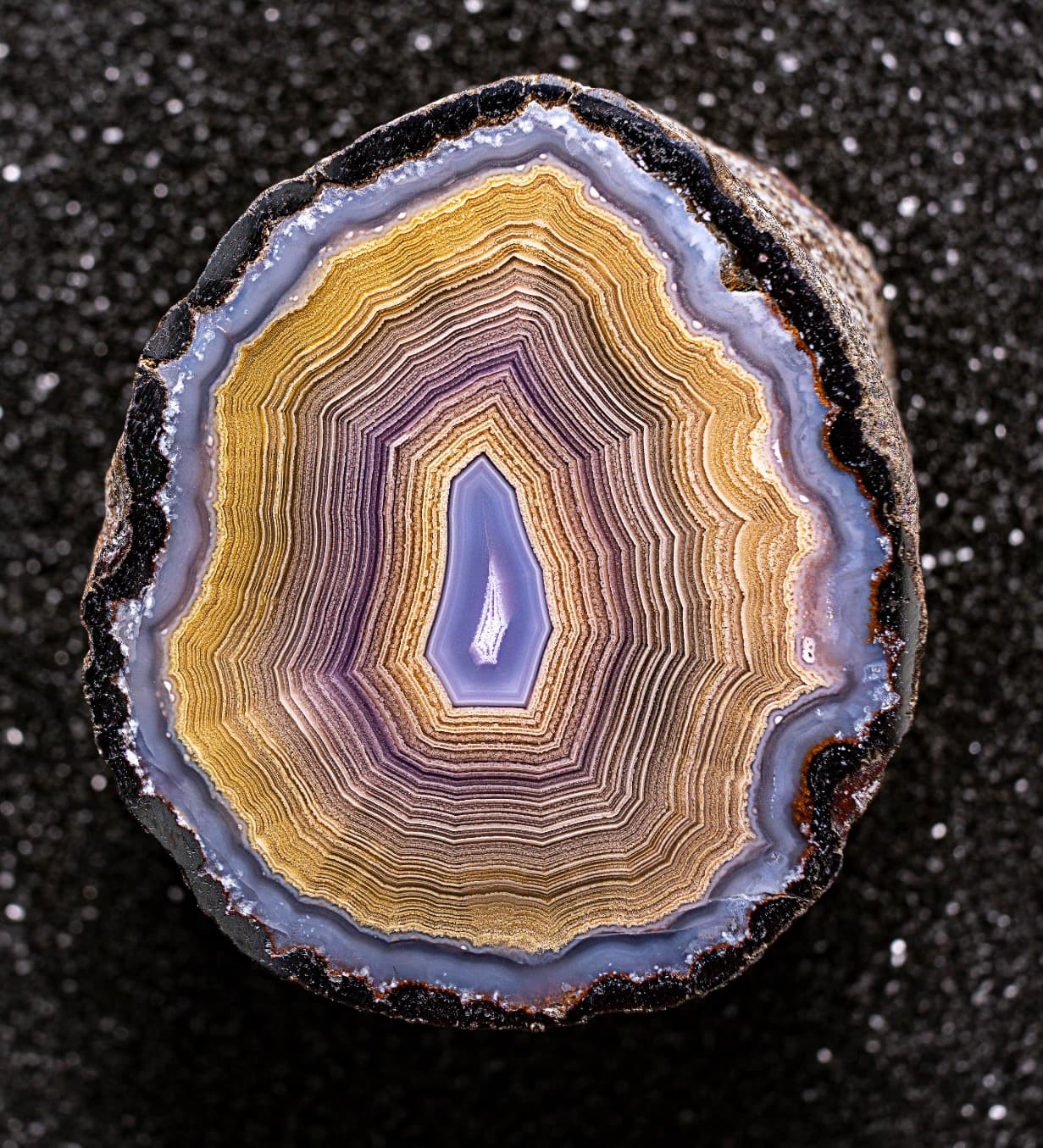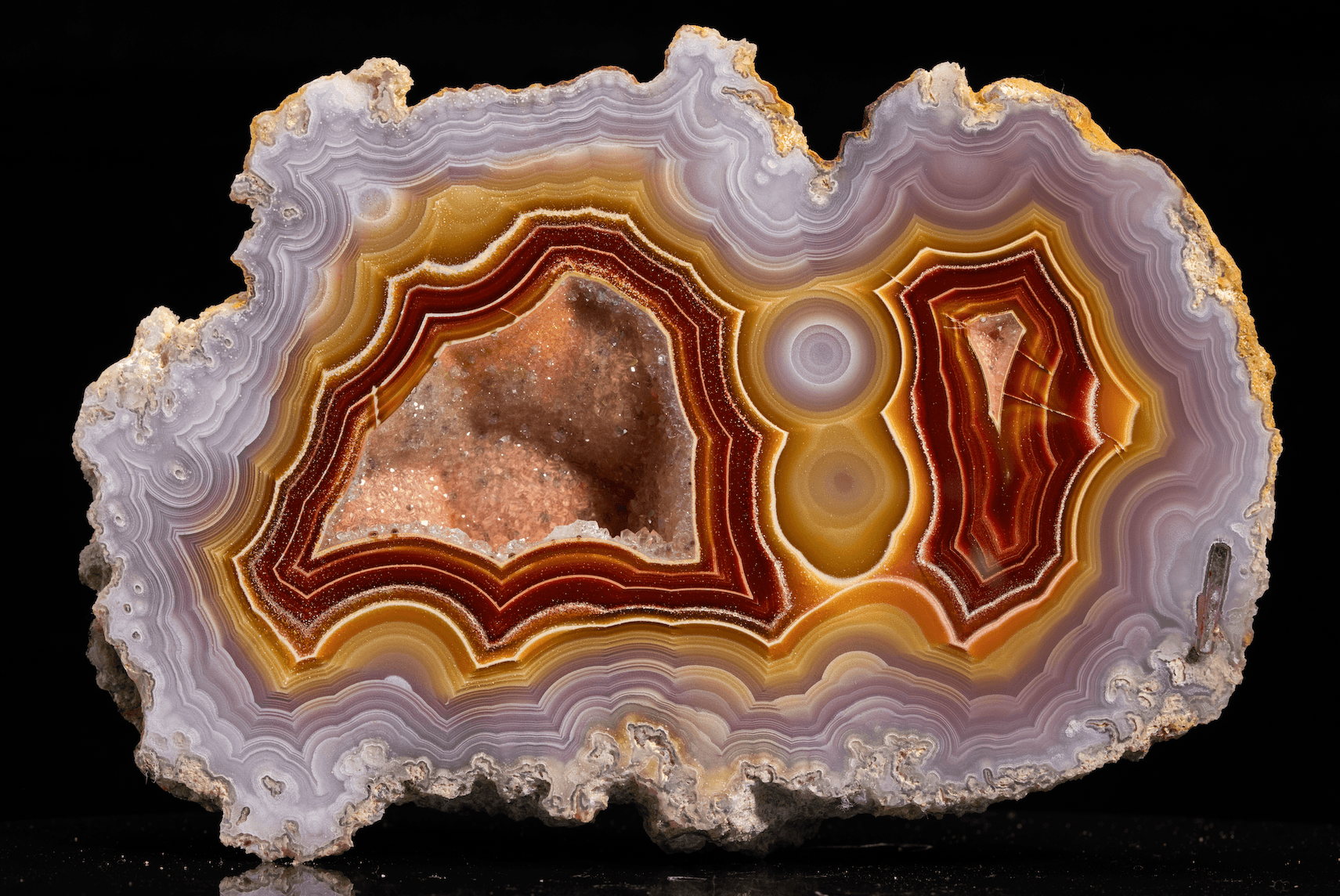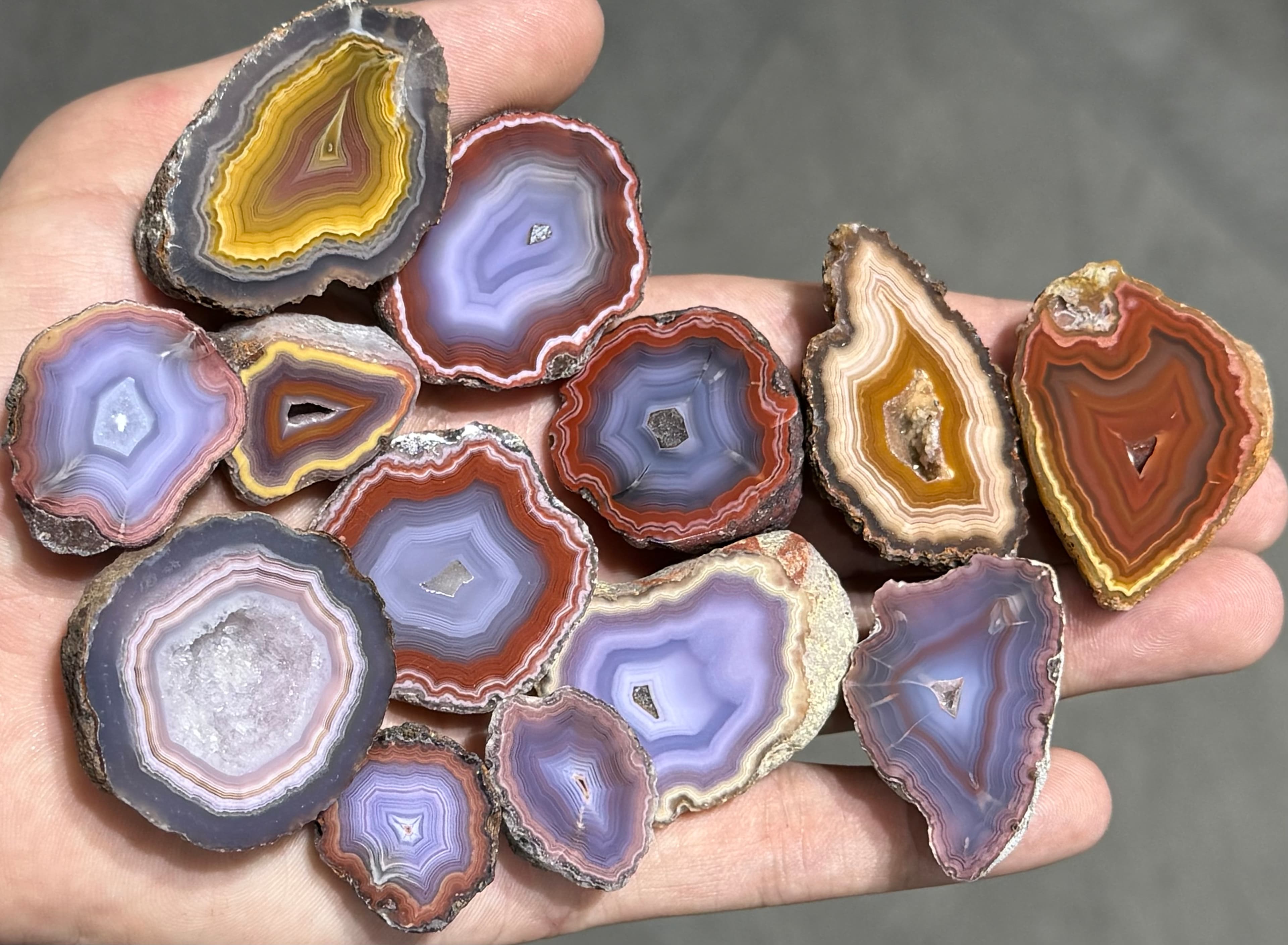









Agates aren’t meant to be glanced at. They’re meant to be studied.
To collectors, agates are not simply beautiful objects — they are complex geological records shaped by time, chemistry, and structure. Learning to identify and understand those elements is what transforms agates from “nice stones” into lifelong obsessions.
This guide introduces the framework we use to evaluate, categorize, and describe agates. Think of it not as a checklist, but as a language — one that allows you to see more, understand more, and connect more deeply with each piece.
Why No Two Agates Are Ever the Same
Agates form in volcanic environments over immense spans of time. Silica-rich fluids move through cavities in rock, depositing layers gradually. Changes in chemistry, pressure, temperature, and flow alter how each layer forms.
Because these conditions are never repeated in exactly the same way, every agate records a unique sequence of events.
That’s why some agates feel calm and symmetrical, while others appear chaotic, dramatic, or wild. Once you understand this, comparison stops being subjective — it becomes informed.
The 7 Core Elements of Agate Identification
This system breaks agates down into their fundamental components. Each category represents a different aspect of how the agate formed, changed, and was ultimately revealed.
1. Structure
Structure describes the agate’s overall architectural form.
Is it banded? Does it preserve the shape of a former crystal (pseudomorph)? Is it lining a cavity (perimorph)?
Structure is the foundation. It determines how everything else behaves visually and physically.
2. Banding
Banding is the agate’s rhythm.
Tight banding suggests repeated, stable deposition over long periods. Wide or irregular banding points to changing conditions or interruptions. Water-level banding records pauses in growth.
Banding is not decoration — it is a timeline.
3. Features
Features are the events that happened during formation.
Eyes, tubes, plumes, sagenite, geodes, fortifications, flow channels — these are not add-ons. They are geological moments frozen in place. Some add complexity, others rarity, and a few redefine the entire character of the agate.
4. Optical Effects
Some agates don’t just sit there — they react to light.
Parallax, depth illusion, iridescence, and druzy sparkle occur when internal structures interact with light in specific ways. These effects often separate good agates from unforgettable ones.
5. Husk (Outer Shell)
The husk is the agate’s original boundary.
A full husk tells a complete story. Windows reveal internal potential. Broken husks expose the violence of extraction. Husk condition adds geological and emotional context to the piece.
6. Fractures
Not all fractures are flaws.
Some are natural and healed — evidence of stress during formation followed by recovery. Others are post-formation damage. Learning to tell the difference is critical for serious collectors.
7. Finishing
How an agate is prepared affects how it communicates.
Flat mirror polish emphasizes structure and depth. Dome polish enhances movement. Leaving areas raw preserves geological honesty.
Finishing doesn’t create beauty — it reveals it.
Why This System Matters
Without a framework, agates blur together.
With one, every agate becomes readable.
This system allows collectors to:
Compare intelligently
Describe accurately
Appreciate deeply
It replaces “I like this one” with “I understand why this one matters.”
What Comes Next
This guide is only the beginning.
In upcoming articles, we’ll explore each category in depth — with photographs, real examples, and field insights that show how these elements appear in natural material.
Agates are not just stones.
They are archives of Earth’s history.
And once you learn how to read them, they never stop revealing more.
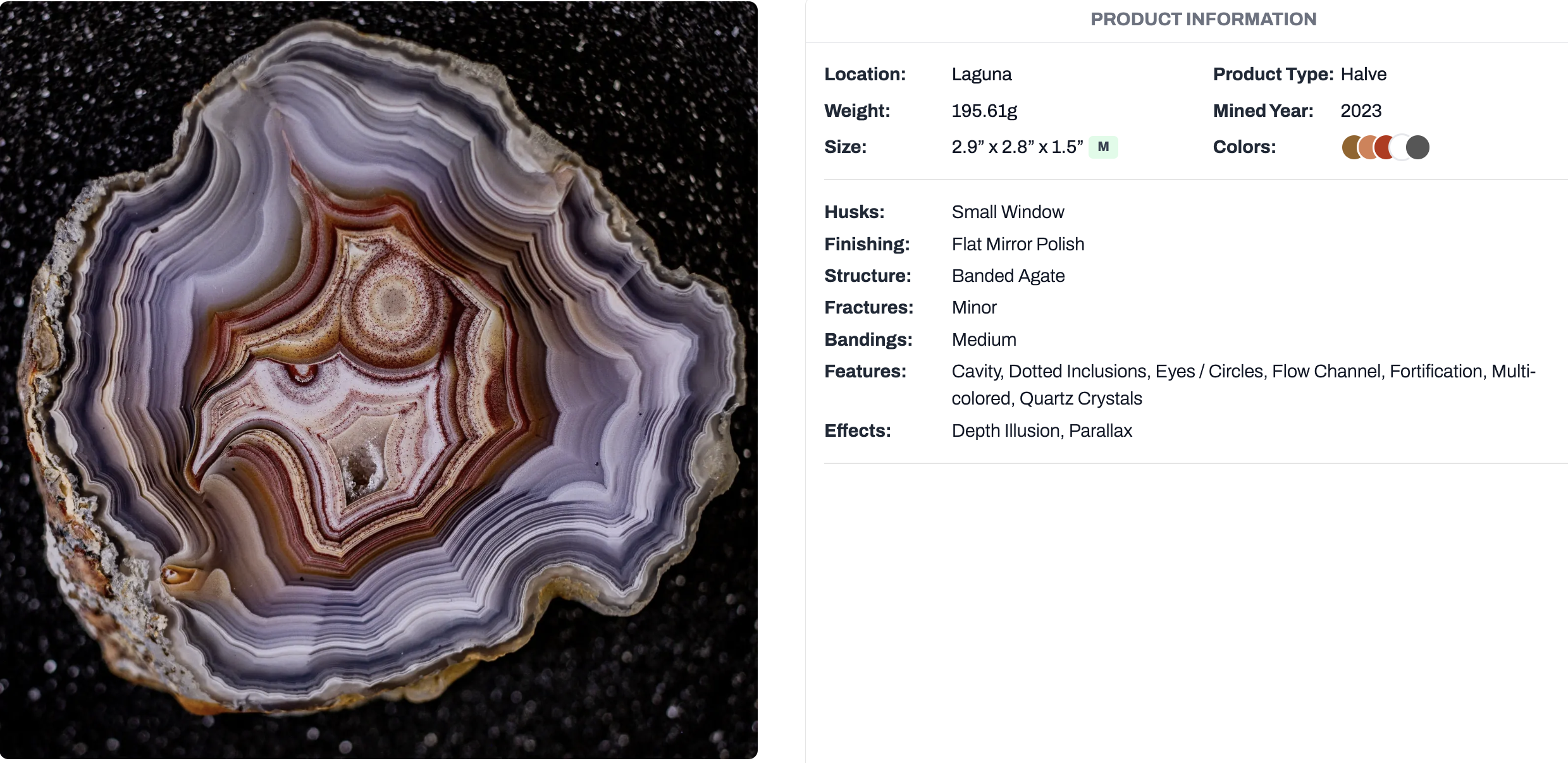
Explore our collection to see this agate categorization system in action.
CHECK OUT THIS SPECIMEN HERE