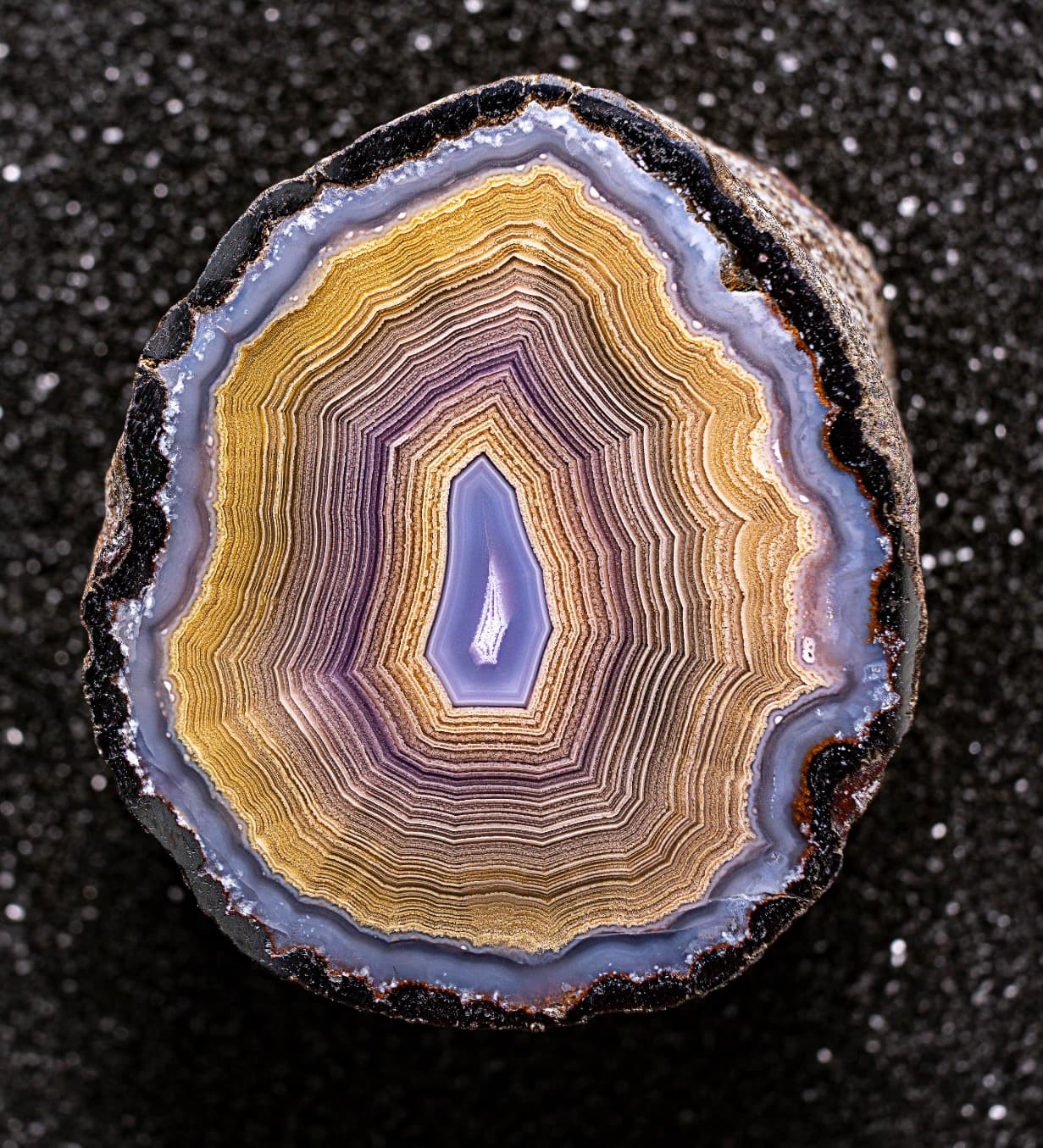








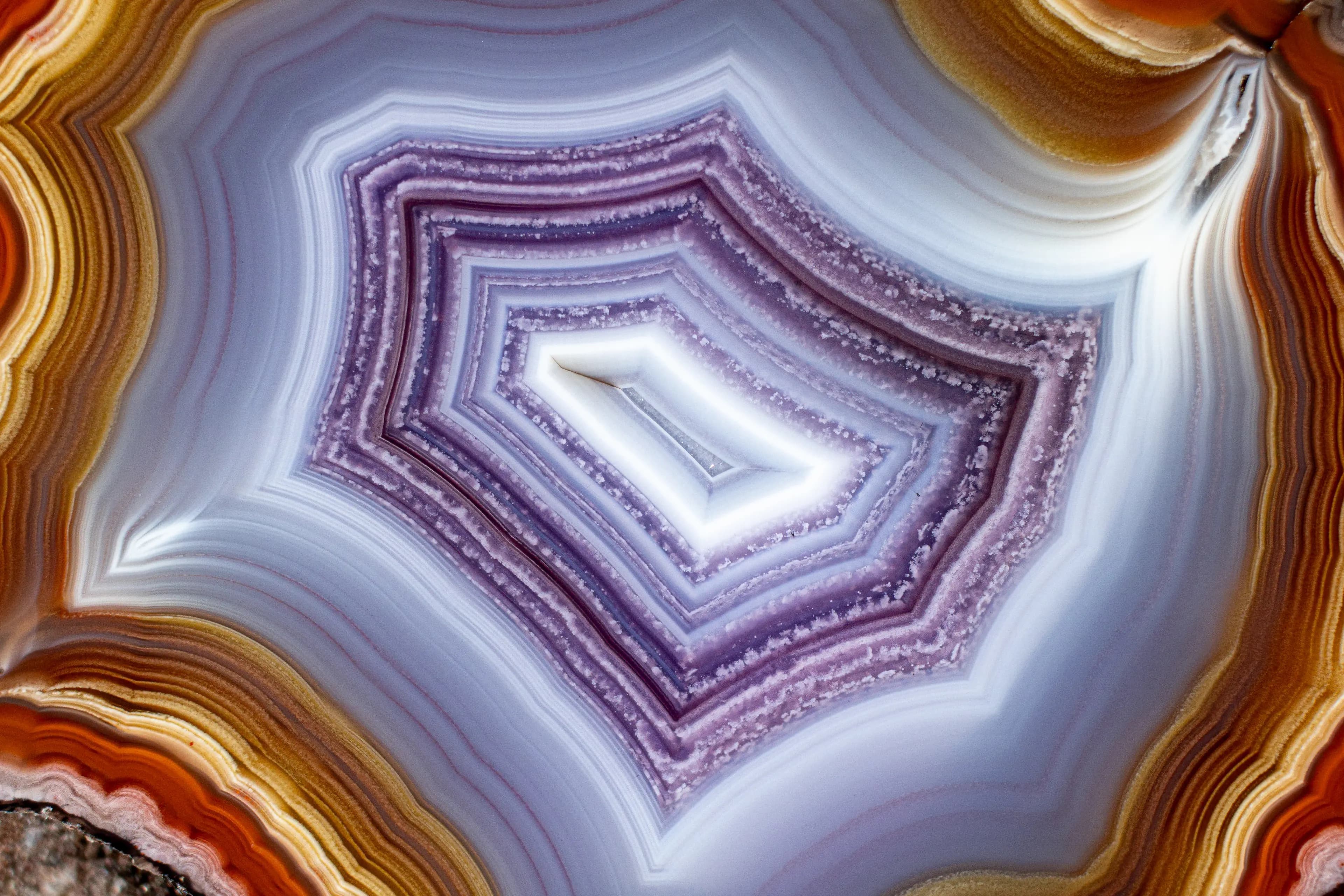
Why Coyamito Agates Are Violet: The Science Finally Has an Answer
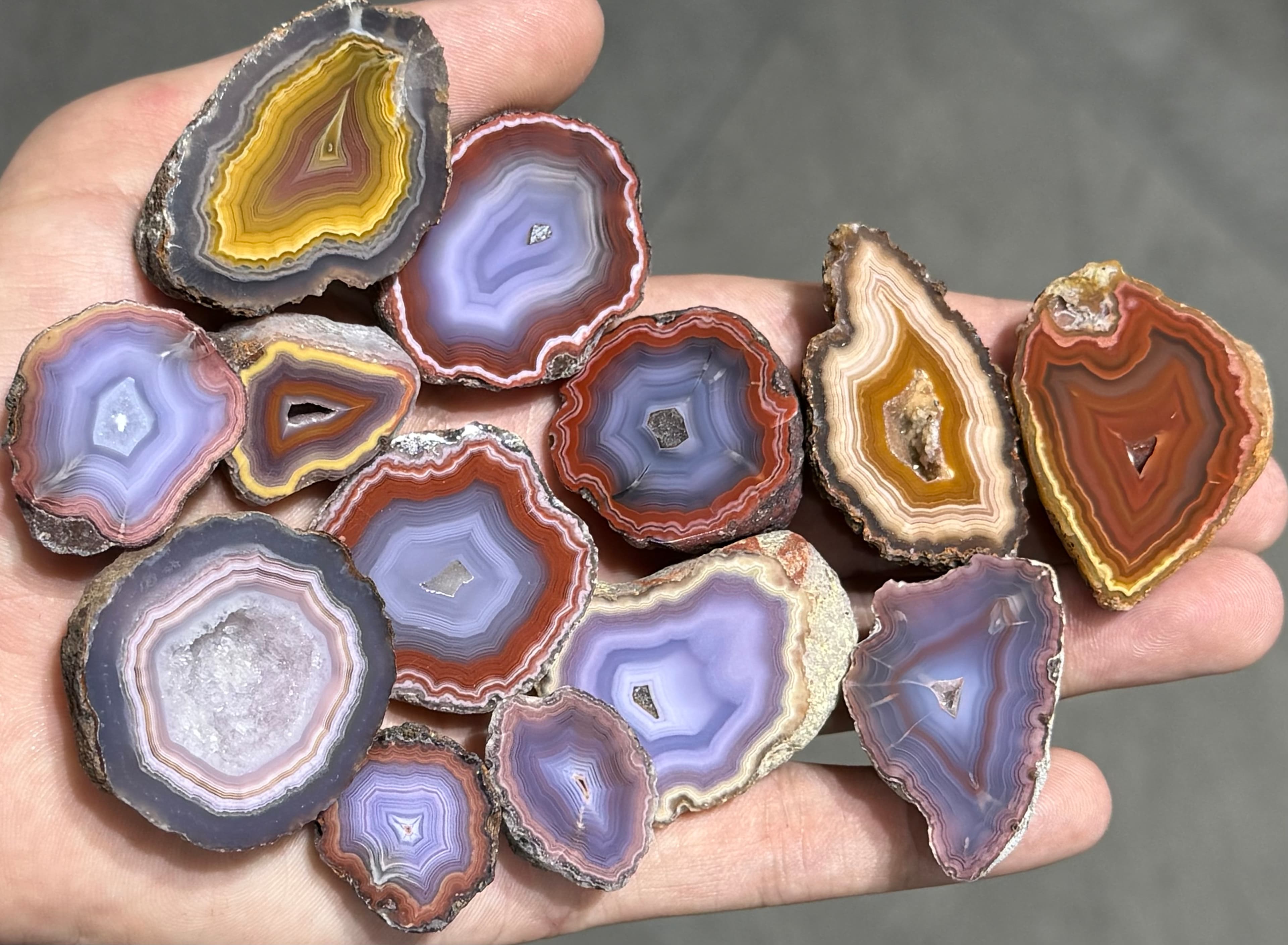
Violet is the rarest color in agates. Collectors have known that for decades. What nobody could explain — until recently — was why.
It took a research team in Germany to figure it out. And what they found connects these stones to something most collectors already know: amethyst.
A color that shouldn't exist
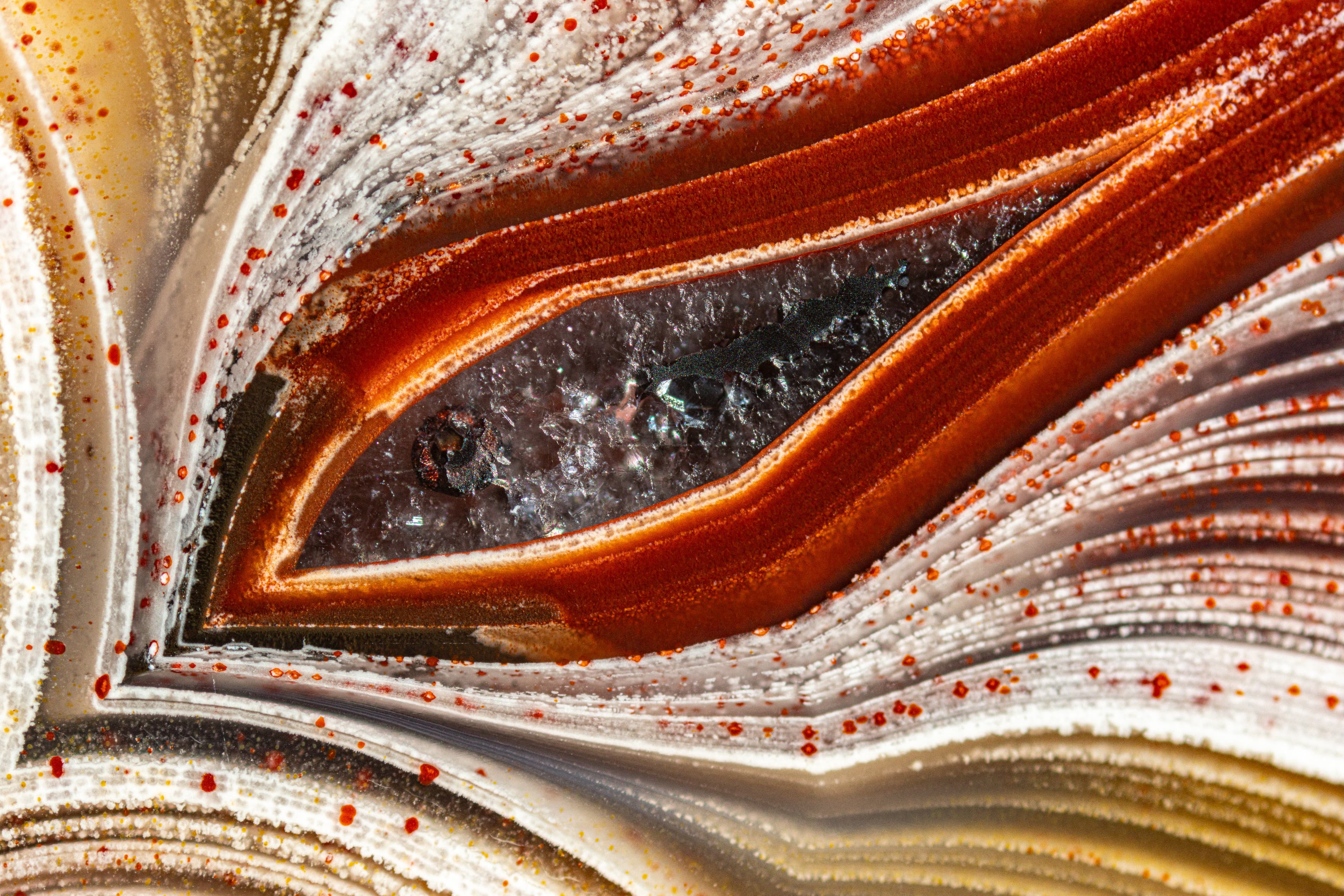
Reds in agates come from hematite. Yellows from goethite. Both are common iron oxide minerals found in deposits worldwide. Those colors make sense.
Violet doesn't follow the same rules. It's not caused by a mineral inclusion sitting between layers. It's caused by iron atoms built directly into the crystal structure of the chalcedony itself, and then changed by radiation.
For nearly 50 years, mineralogists suspected this was happening in Coyamito agates. Nobody had proven it. Whether that color mechanism could even exist in chalcedony — which is microcrystalline quartz and very different structurally from regular quartz — was an open question in the scientific literature.
Then in 2026, Dr. Jens Götze and his team at TU Bergakademie Freiberg published a paper that settled it.
What they found
The team studied agates directly from the Coyamito deposit using multiple spectroscopic methods. The result was clear: the violet color is caused by Fe4+ color centers. Iron atoms in an unusually high oxidation state, locked into the quartz lattice itself.
This is exactly how amethyst gets its color. The mechanism had been documented in amethyst for decades. But in chalcedony, the microcrystalline form, it had never been confirmed anywhere in the world. Coyamito agates are the first documented case.
The full study is open access and free to read
How it works
Three things need to happen at the same time.
Iron has to get incorporated into the quartz lattice itself. Not trapped between layers as an inclusion, but actually substituting for silicon atoms inside the crystal structure. That's unusual on its own.
Uranium has to be present. The Götze team measured concentrations up to 32.5 parts per million in the violet bands. That uranium sits in the surrounding material and emits natural radiation over geological timescales.
Time does the rest. Over millions of years, that radiation converts the iron from its ordinary Fe3+ state into the rarer Fe4+ state. That single electron change is what creates the violet.
Change any one of those three conditions and you get a different color or no color at all. All three had to come together in the same place at the same time. That's why this color is so rare.
The heat test
The Götze team also confirmed something important for collectors: heating a violet Coyamito agate to 550°C makes the violet disappear permanently. The Fe4+ converts back to Fe3+ and the color is gone.
This confirms the color is geological and cannot be reproduced artificially. You can't treat a Coyamito agate to make it violet. Either the Fe4+ is there from 38 million years of natural radiation, or it isn't.
Three colors, one stone
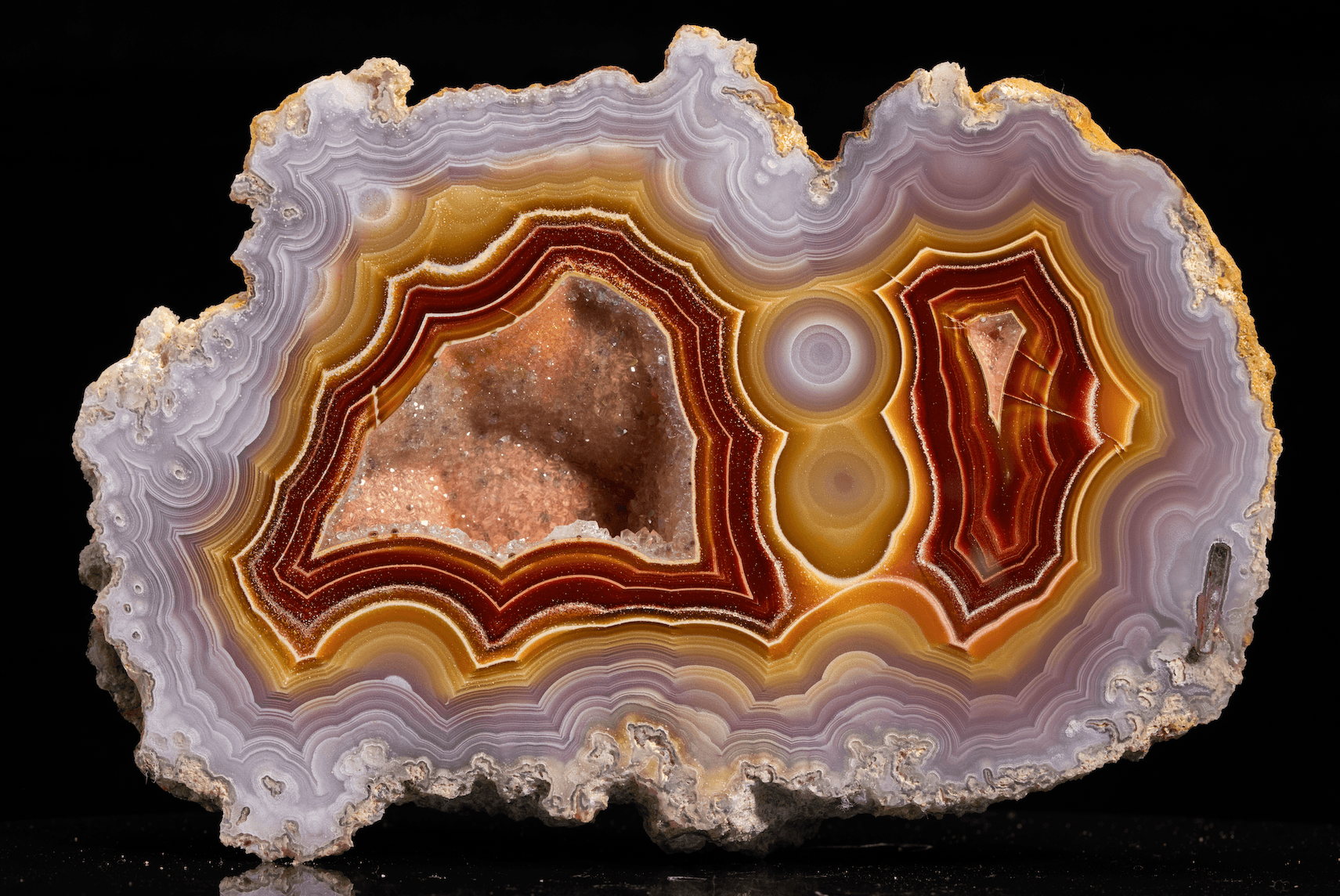
The most remarkable thing about Coyamito material is that you can often find three different color mechanisms in a single piece.
Violet bands come from Fe4+ in the crystal lattice. Yellow bands come from goethite inclusions between layers. Red bands come from hematite inclusions between layers.
Same element, iron, three completely different outcomes, depending on how it ended up in the stone.
When you see a Coyamito with all three colors in one specimen, you're looking at a record of changing conditions during formation. Each band captured a different chemical moment. Each one is a different chapter of the same 38-million-year story.
Why this matters
Before this research, violet Coyamito agates were considered rare because they looked rare. Now there's a confirmed scientific reason: the Fe4+ color center in chalcedony has only been documented in agates from Chihuahua, Northern Mexico. No other deposit has been confirmed to produce it.
You won't find this color mechanism in Brazilian agates, Montana agates, or anything from Lake Superior. The geology isn't there.
Every piece in our Coyamito collection comes directly from the deposit the Götze team studied. When we say it's Coyamito, we can trace it to the source.
---------------------------------------------------------------------
Source: Götze, J., Mrozik, M., DeCorby, M., Pan, Y. & Wildner, M. (2026). Origin of violet colour in agates from Chihuahua, Northern Mexico. Mineralogy and Petrology. https://doi.org/10.1007/s00710-026-00977-x — Open access, free to read.