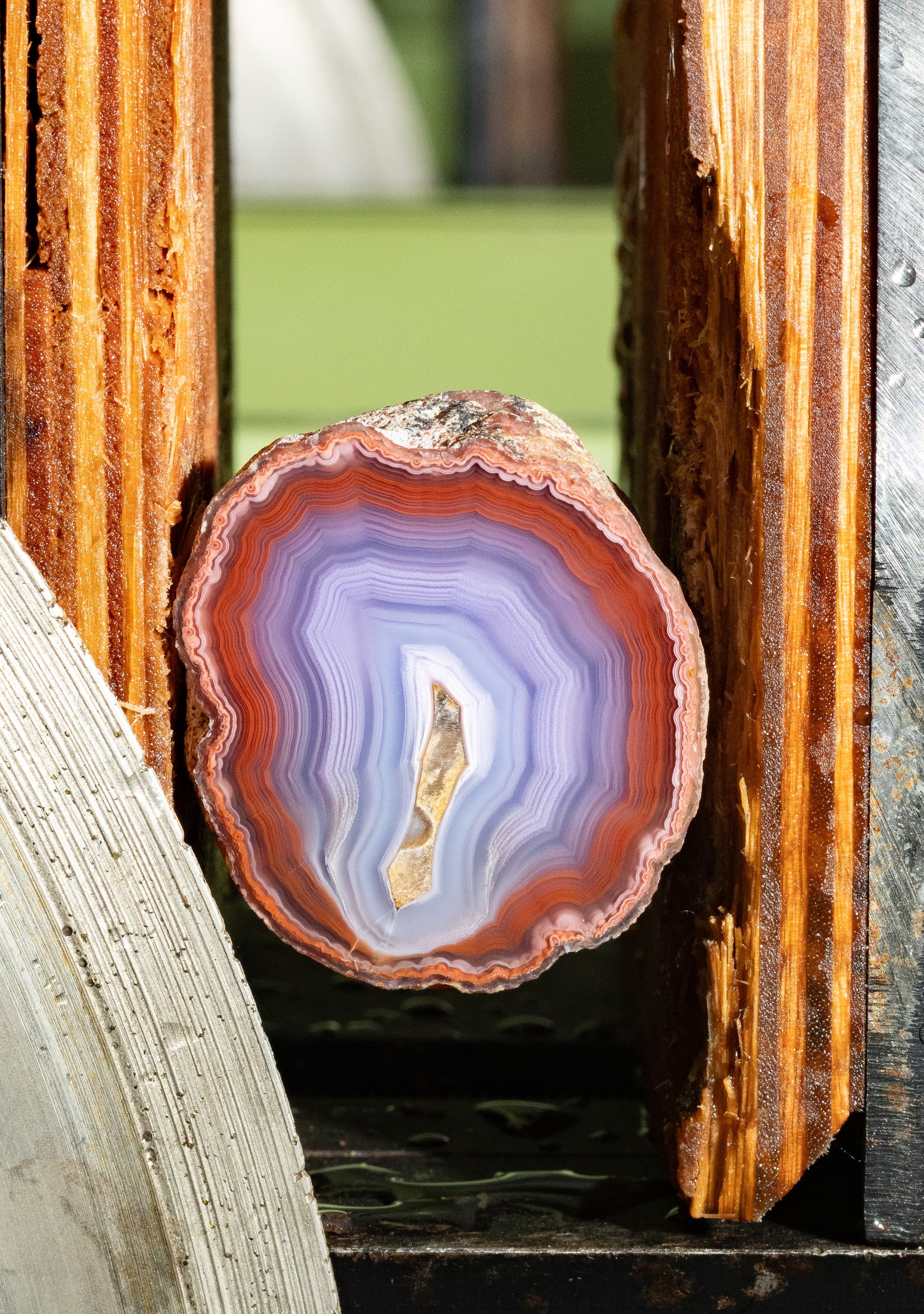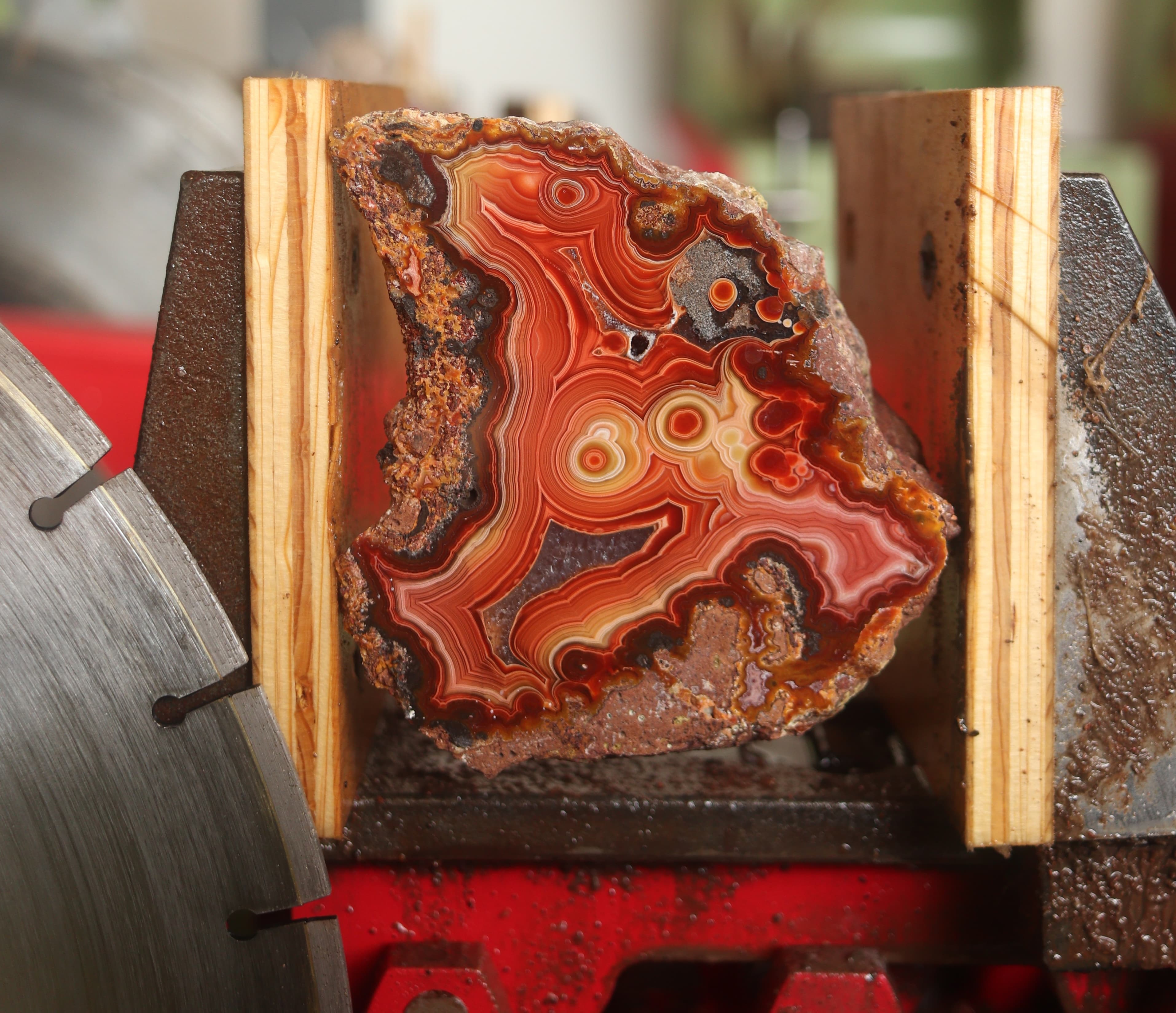








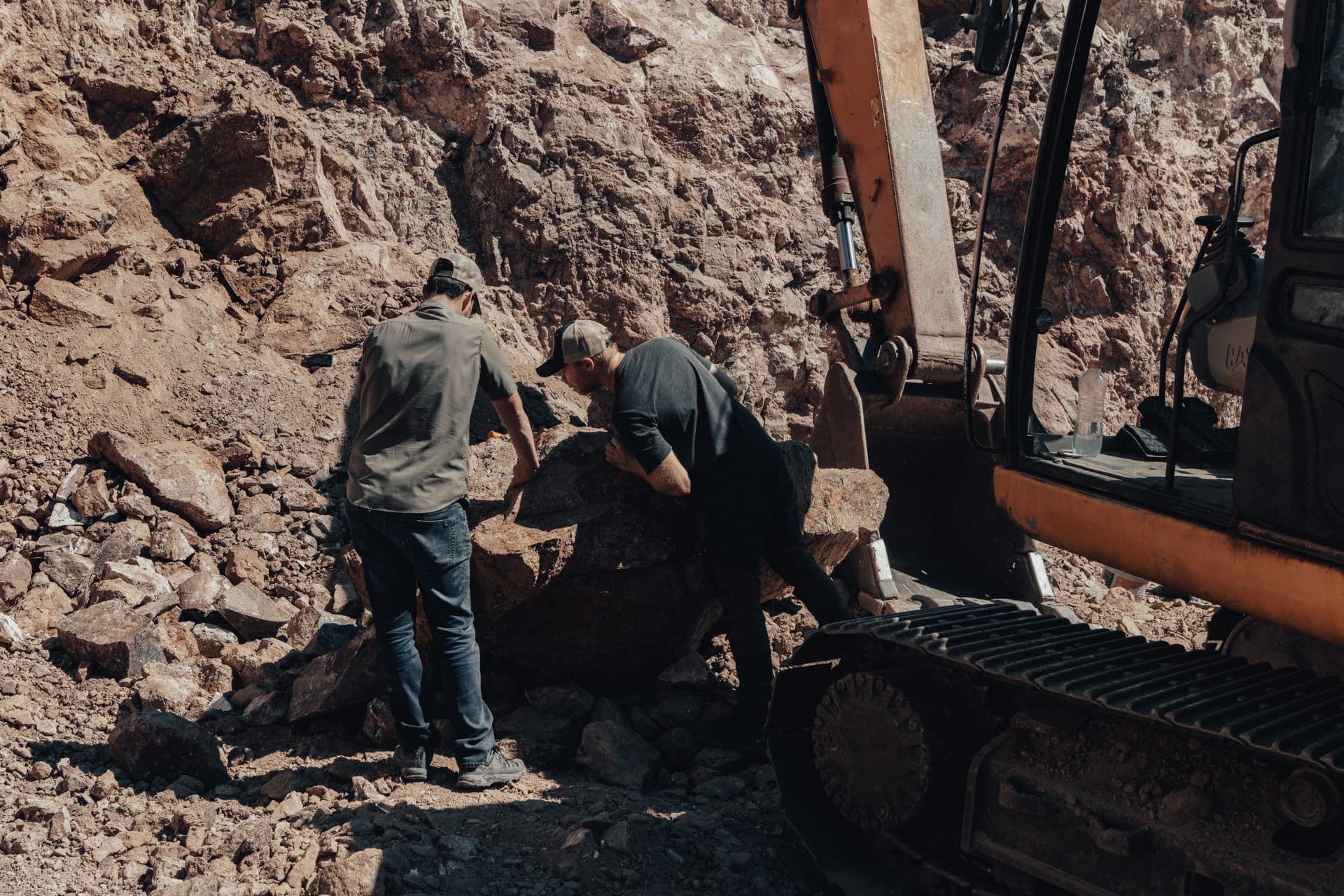
Finding agates is extremely hard.
Not because they aren’t beautiful, but because the process demands patience, repetition, and the ability to keep going without guarantees. There is no clear progress, no visible signal that success is close, and no way to know if the effort will lead to something special.
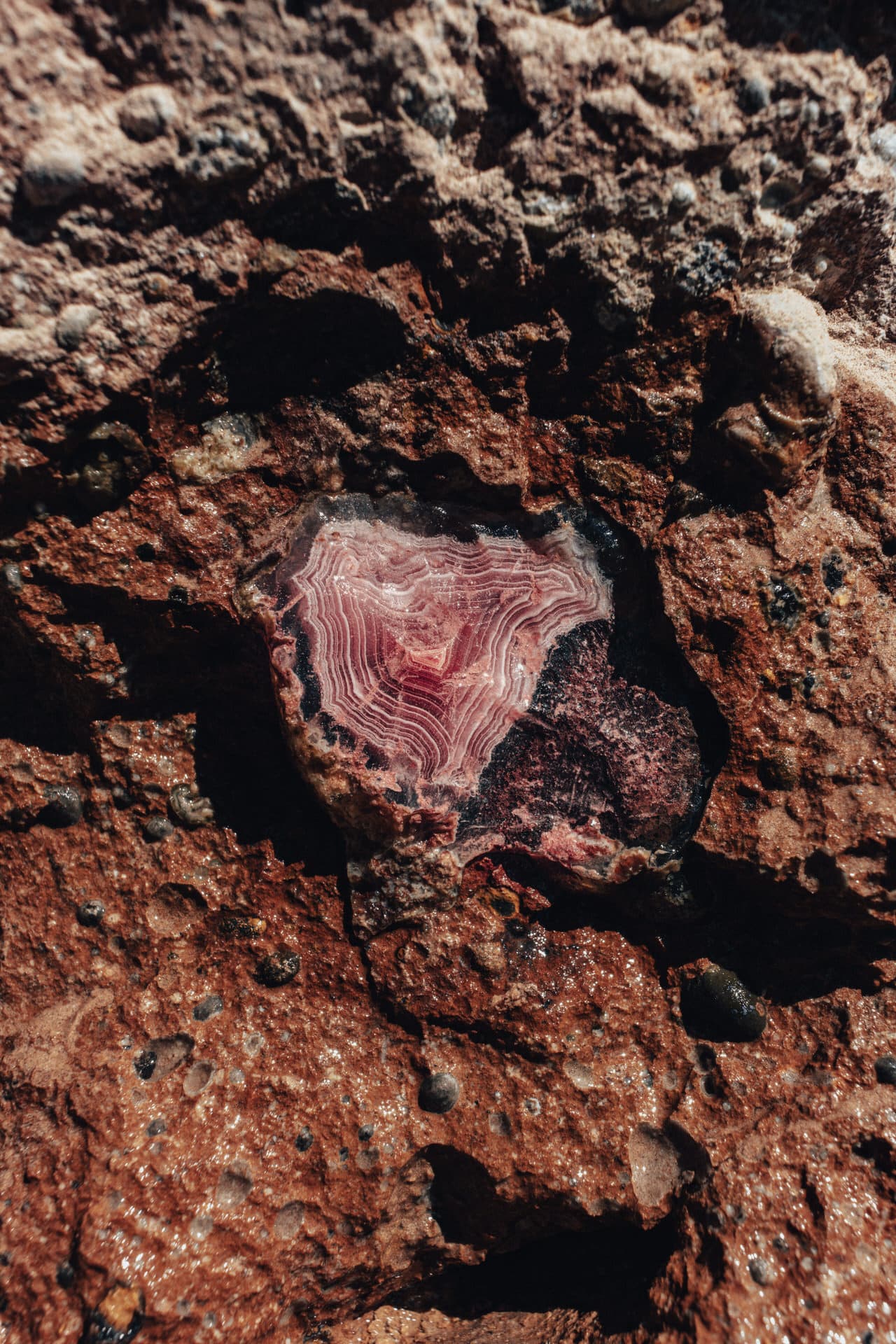
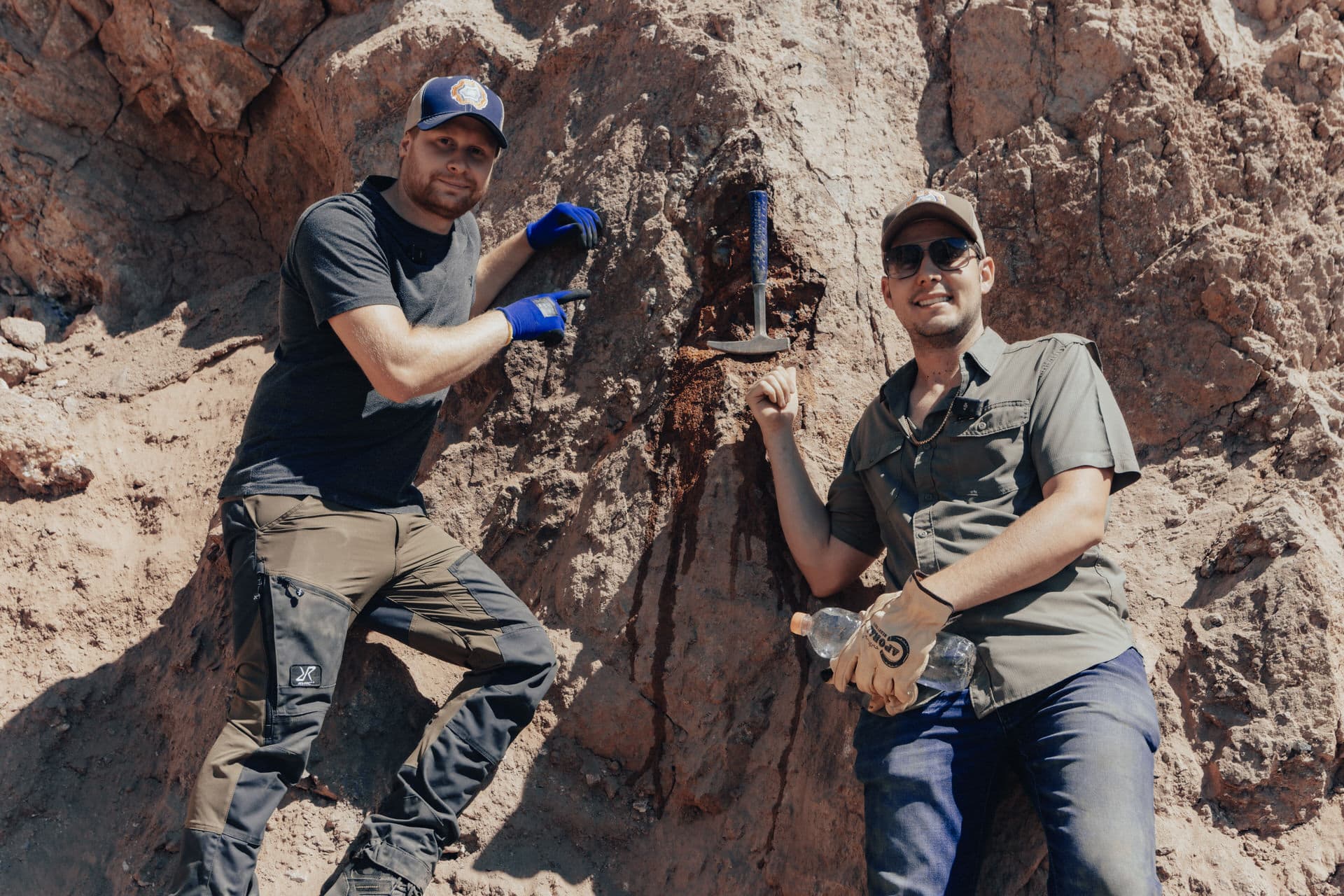
Agates are locked inside extremely hard rock. Reaching them requires sustained effort just to expose material, with no indication of what lies inside. Every nodule recovered is a question mark.
It might be empty.
It might be fractured.
It might be ordinary.
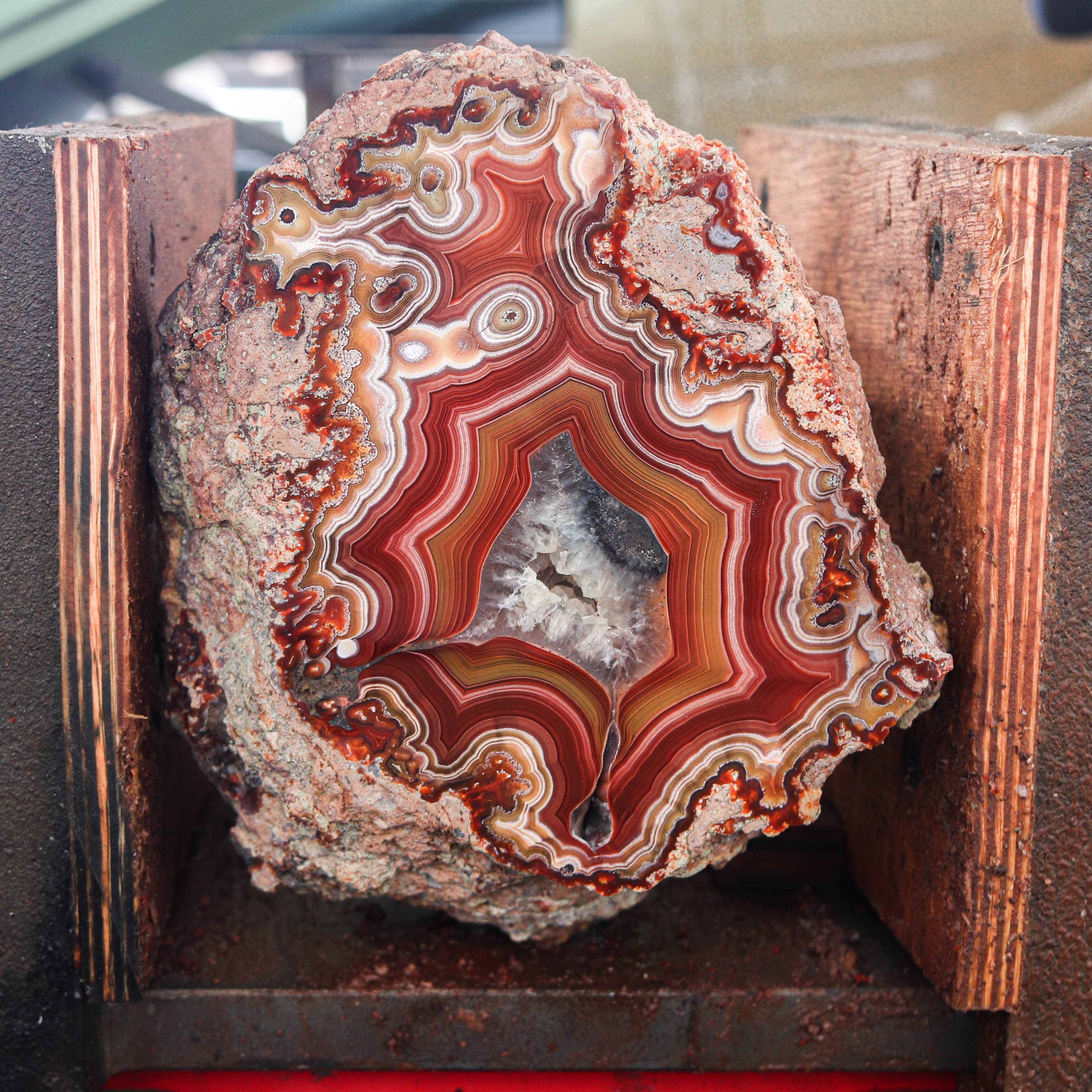
Or — rarely — it might be something extraordinary.
There is no way to know in the moment.
Working Without Answers
When agates are recovered, there are no immediate answers. You can’t see structure, color, or depth. You can’t confirm whether anything remarkable is there at all. Decisions are made without feedback, and certainty only comes much later.
That delay between effort and understanding is one of the hardest parts of the process. You keep moving forward without knowing if you are getting closer to something meaningful or simply repeating the same outcome again.
The Weight of Repetition
Most days look the same.
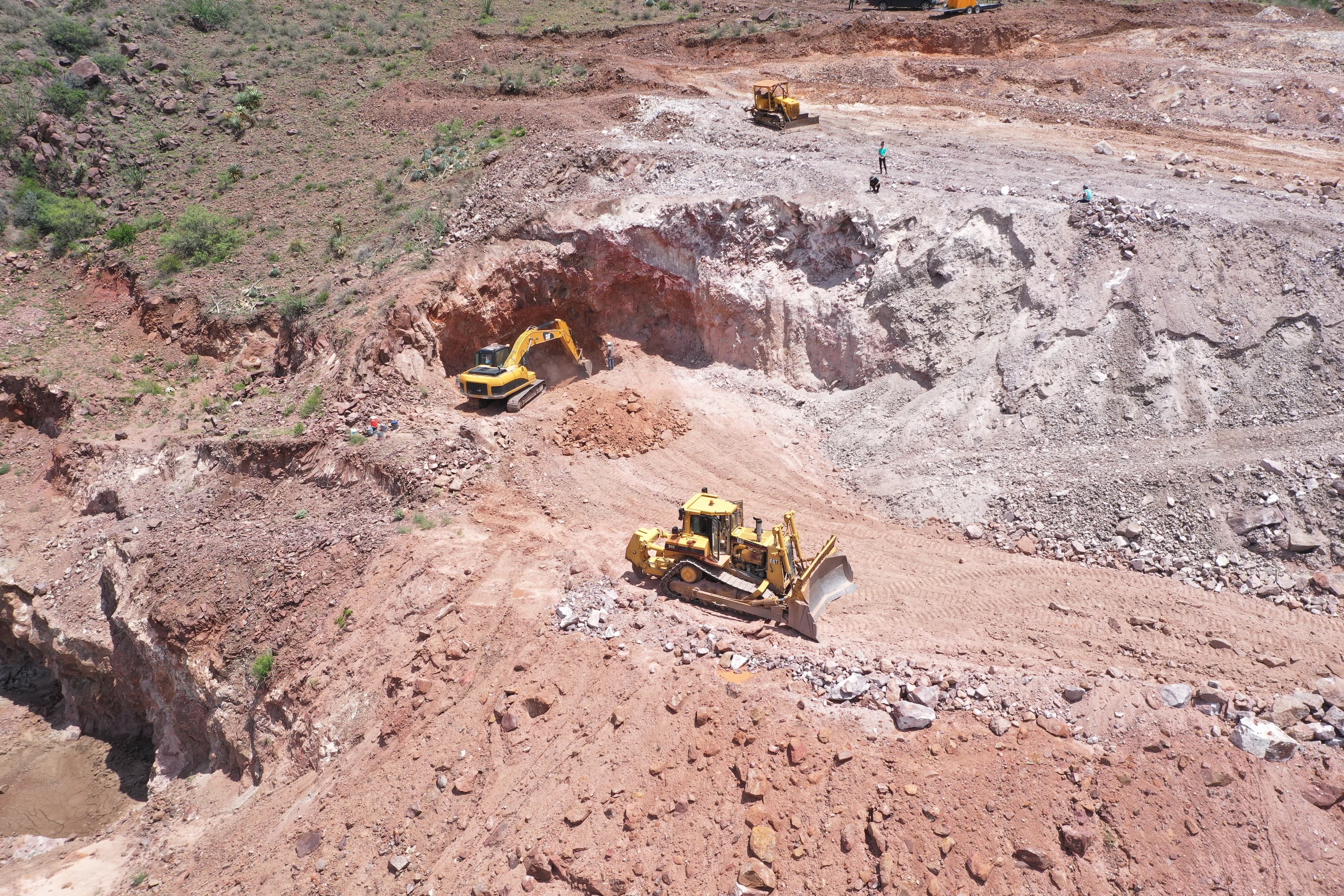
Breaking rock.
Moving material.
Recovering nodules that don’t stand out.
Weeks can pass without a single moment that feels rewarding. The repetition wears you down not because it’s dramatic, but because it’s constant. Progress feels invisible. Doubt becomes familiar.
The challenge isn’t intensity.
It’s endurance.
Why Effort Doesn’t Guarantee Results
The hardest lesson is learning that effort doesn’t scale with reward. You can do everything right and still find nothing remarkable. You can repeat the process hundreds of times before something truly special appears.
Most agates live in the middle — beautiful, well-formed banded pieces that show structure and character, but not extremes. They are rare in their own right, but not exceptional.
Truly exceptional agates are outliers. They appear without warning and cannot be forced.
Understanding this changes everything. It replaces frustration with patience and expectation with appreciation.
When It Finally Pays Off
And then, sometimes, much later, it does.
A nodule appears.
The structure feels right.
The formation is different.
In that moment, the uncertainty fades. The long stretches of nothing suddenly make sense. Not because the process became easier — but because discovery finally arrived.
That feeling is priceless.
Why the Difficulty Matters
If finding great agates were easy, they wouldn’t feel the way they do. Their value isn’t only in color or pattern, but in everything that had to happen — and everything that almost didn’t.
Agates don’t reveal themselves quickly. They reward patience, attention, and the willingness to continue without reassurance.
And when something truly special appears, it carries the weight of every ordinary stone, every long stretch, and every reason you almost stopped.
That is why finding great agates is so difficult.
And that is why, when it finally happens, it matters.