







Every agate cutter knows this moment.
You’re holding a piece that looks… ordinary.
No obvious color. No dramatic shape. Nothing that screams special.
You set it aside, already convinced you know how it will end.
And sometimes, you’re right.
But every so often, the agates you almost didn’t cut turn out to be the ones that teach you the biggest lesson of all.
Experience Can Be Your Worst Enemy
With time, cutters develop instincts. You learn to recognize shapes that usually fail, textures that rarely deliver, colors that don’t go deep. That experience is valuable — but it can also become dangerous.
Because agates don’t follow rules.
They follow chance, chemistry, and timing.
Some of the most forgettable-looking rough has produced formations so unexpected that they reset expectations entirely.
The Outside Is a Poor Storyteller
Agates are masters of misdirection.
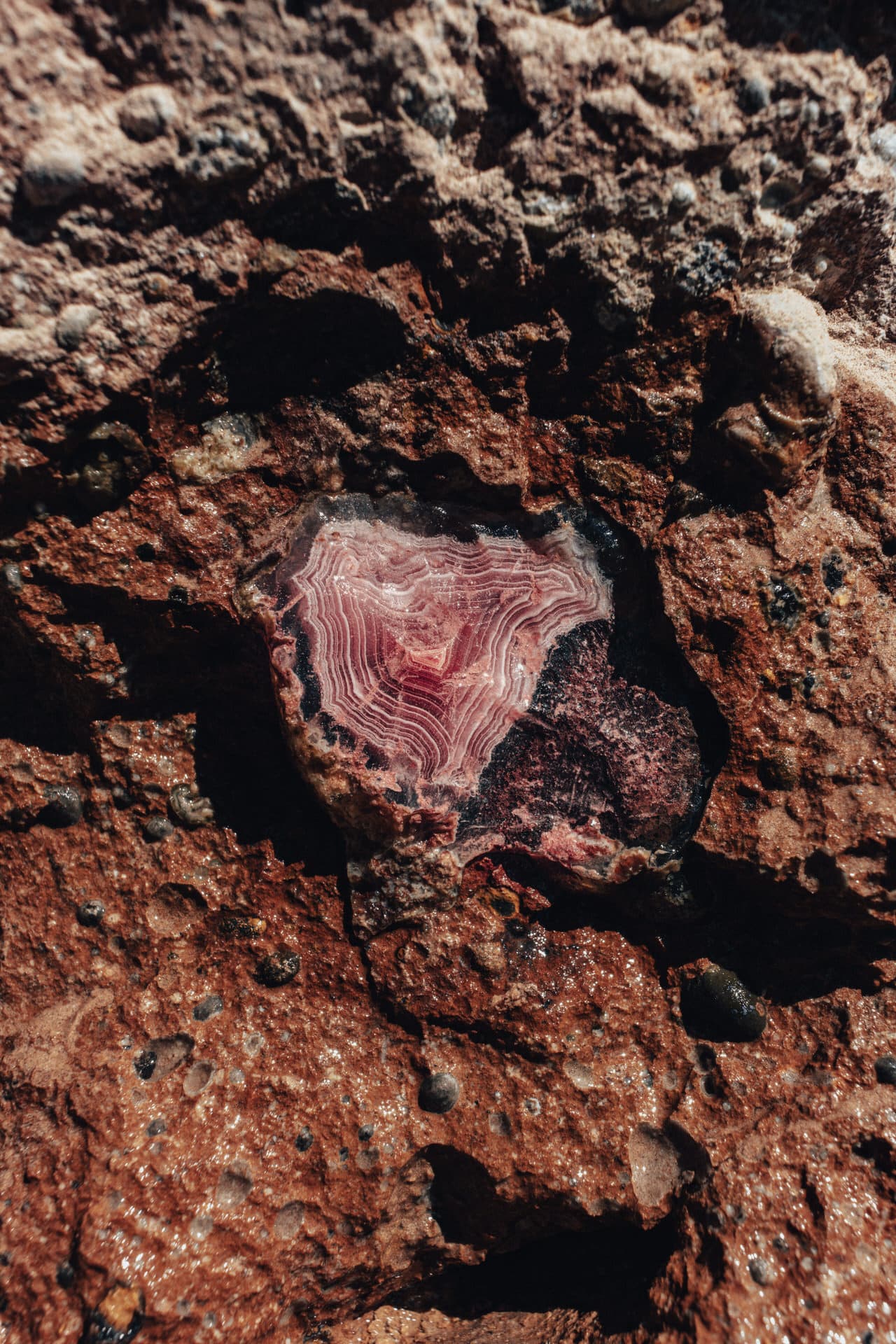
A dull exterior doesn’t mean a dull interior.
A clean, promising shell doesn’t guarantee anything.
Surface clues help — but they never decide the outcome.
That’s why agates remain addictive. No matter how long you’ve been cutting, certainty is never on your side.
Why the Least Promising Pieces Surprise Us
Some agates form in ways that hide everything that matters until the very last moment. Color may be buried deep. Structure may only appear at the core. Banding may tighten and intensify where you least expect it.
These are the stones that reward curiosity over confidence.
They remind you that geology doesn’t care about first impressions.
The Moment You Almost Missed
Every experienced cutter can point to one.
The agate that sat on the shelf.
The one cut out of boredom.
The one opened “just to clear space.”
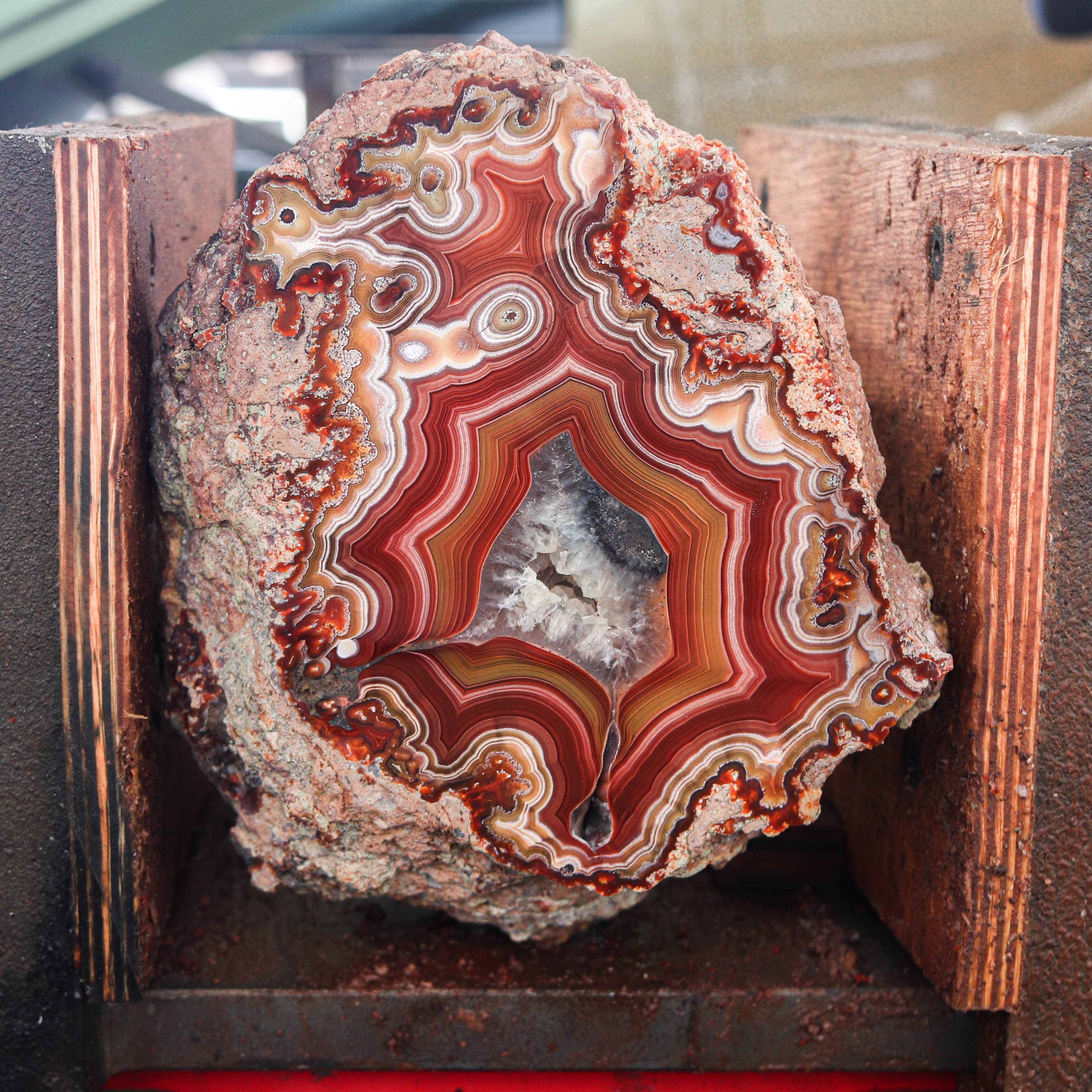
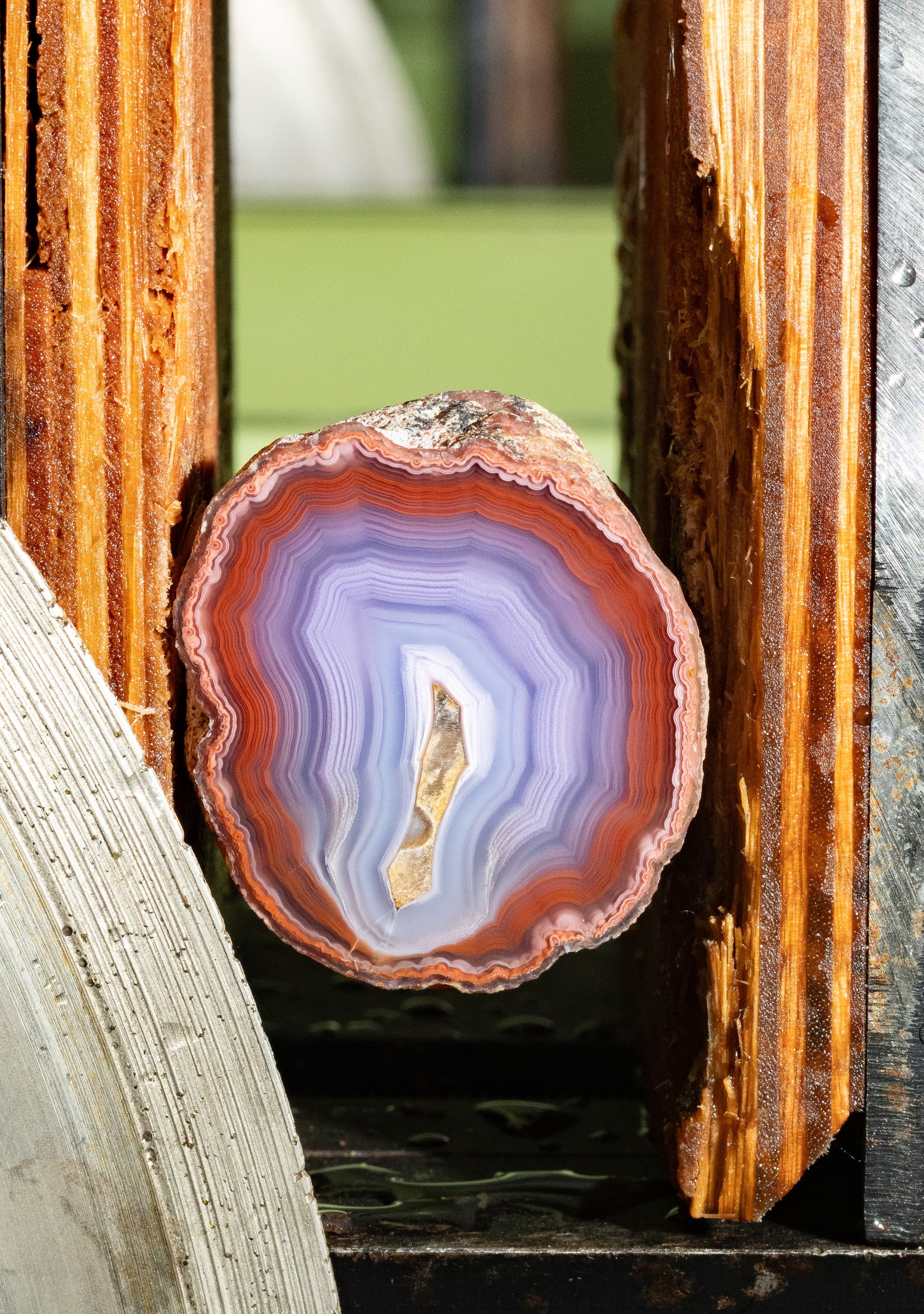
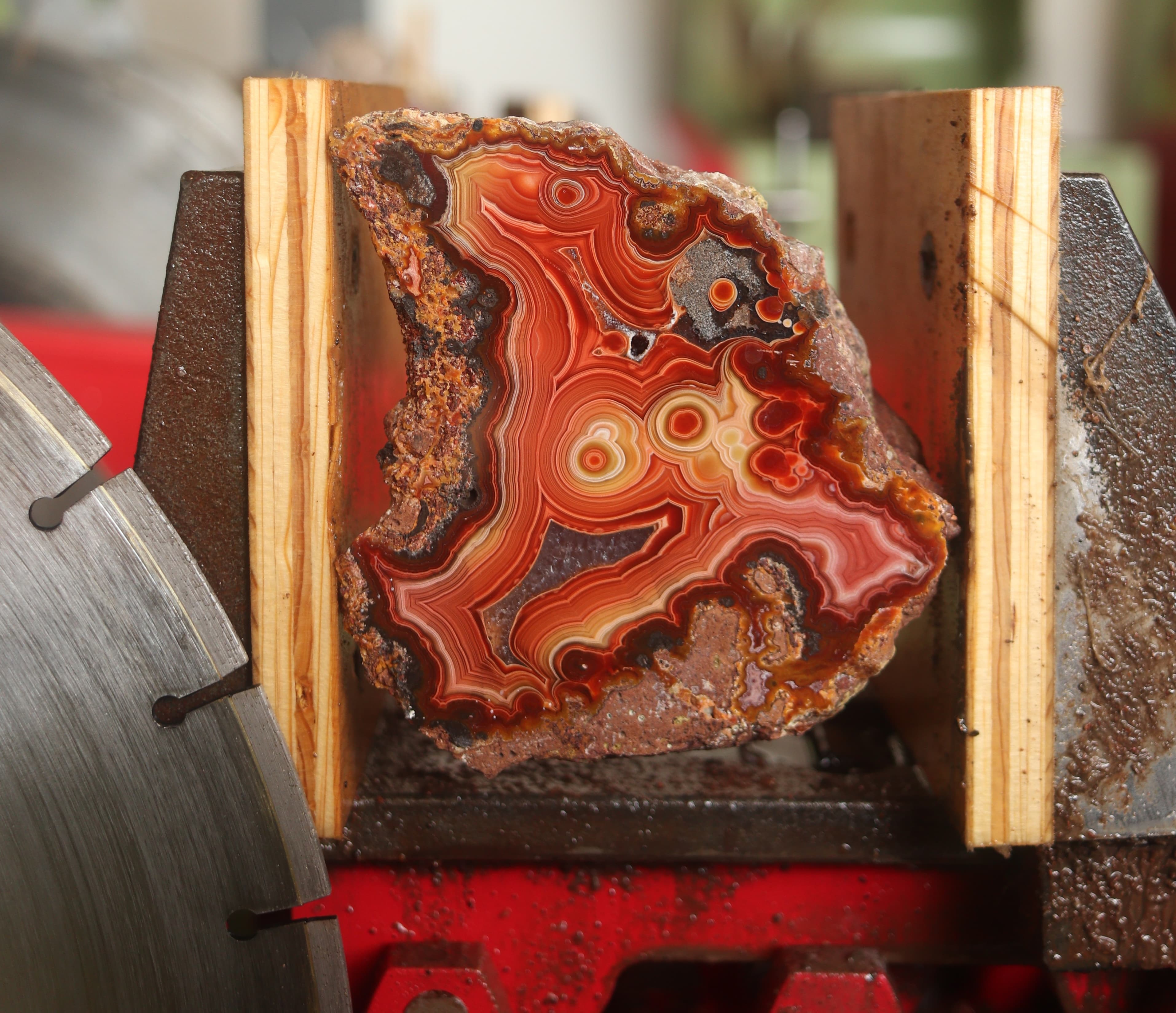
And then — the saw reveals something unreal.
That moment hits harder than any planned success, because it wasn’t supposed to happen.
Why We End Up Cutting Everything
After enough surprises, a shift happens.
You stop trying to outsmart the stone.
You stop ranking rough too quickly.
You realize that the only honest answer is inside the agate itself.
That’s when the rule becomes simple:
If it’s a banded agate, it deserves a chance.
Not because it will be exceptional — but because exceptional agates rarely announce themselves.
What This Teaches About Rarity
The existence of these surprise agates is exactly why truly great pieces are so rare.
They’re not obvious.
They’re not predictable.
They hide until the very end.
That’s also why collections built purely on expectation rarely succeed — and why discovery always stays exciting.
Humility Is Part of the Process
Agates don’t reward ego. They reward attention.
Every time an unpromising agate wins, it reminds you that experience doesn’t replace curiosity — it should sharpen it.
You don’t master agates.
You negotiate with them.
In the End, That’s the Magic
If the best agates always looked the part, cutting would be boring. There would be no suspense, no doubt, no surprise.
But agates don’t work that way.
They make you hesitate.
They make you question yourself.
And sometimes, they make you grateful you didn’t trust your first impression.
Those are the moments that keep people cutting.