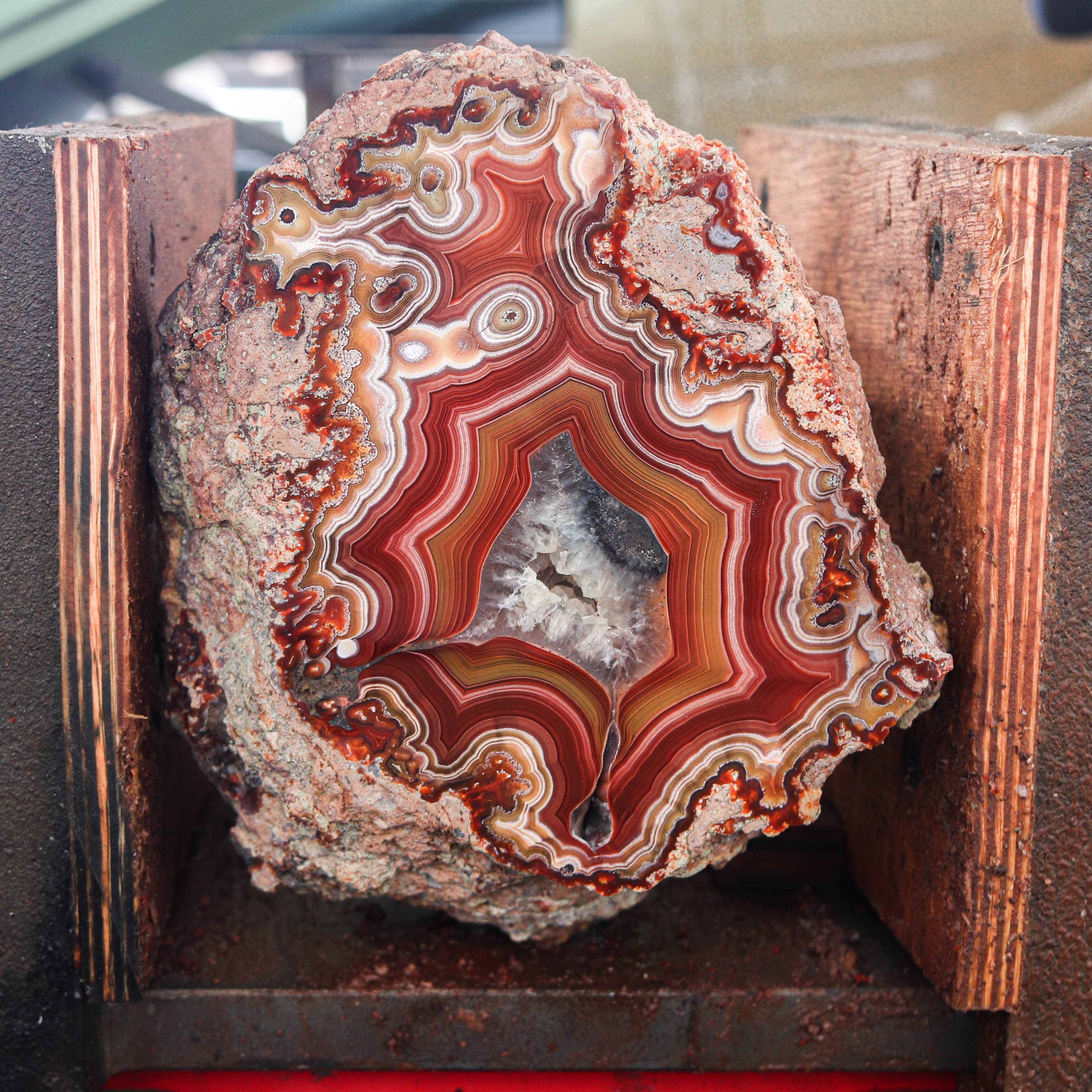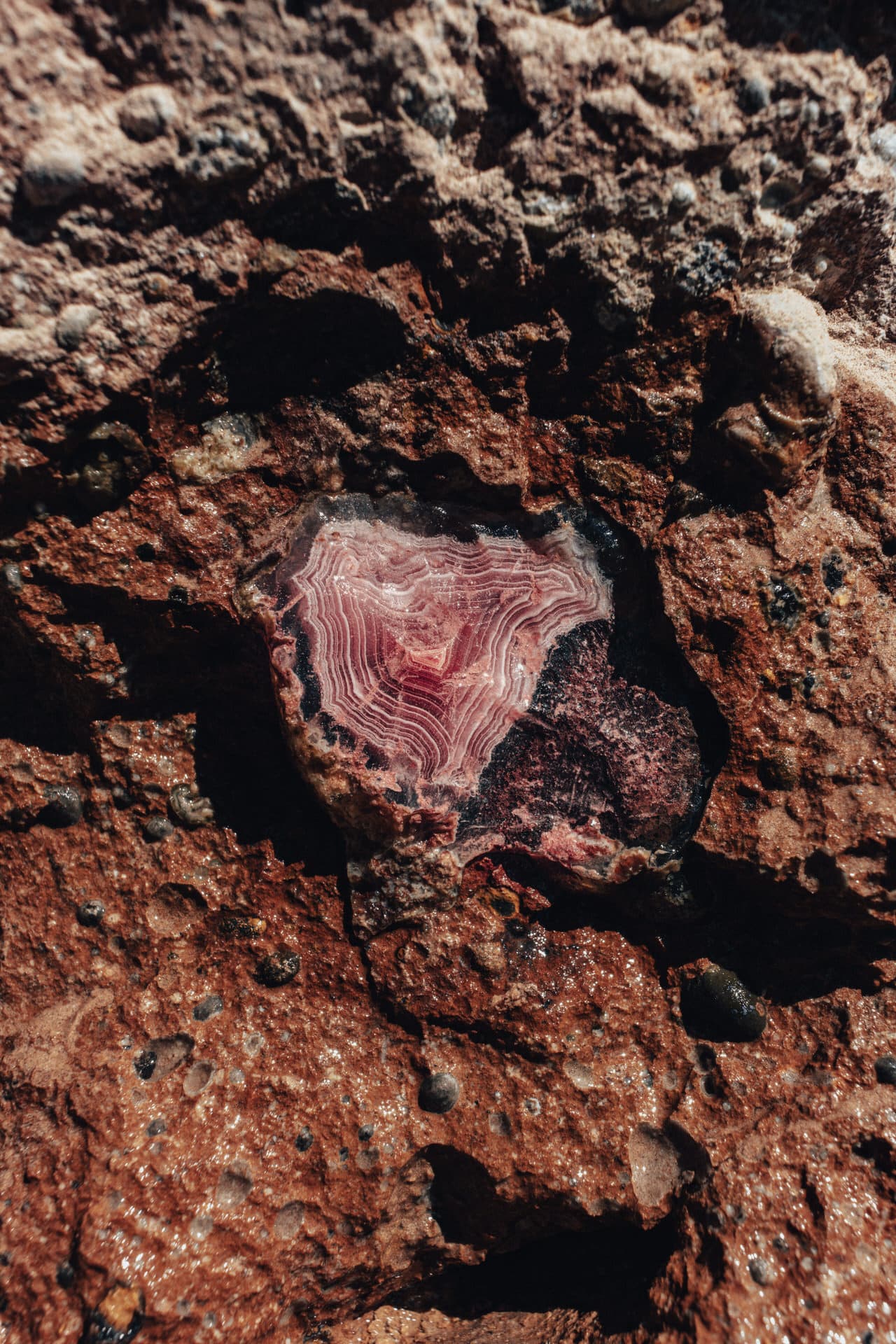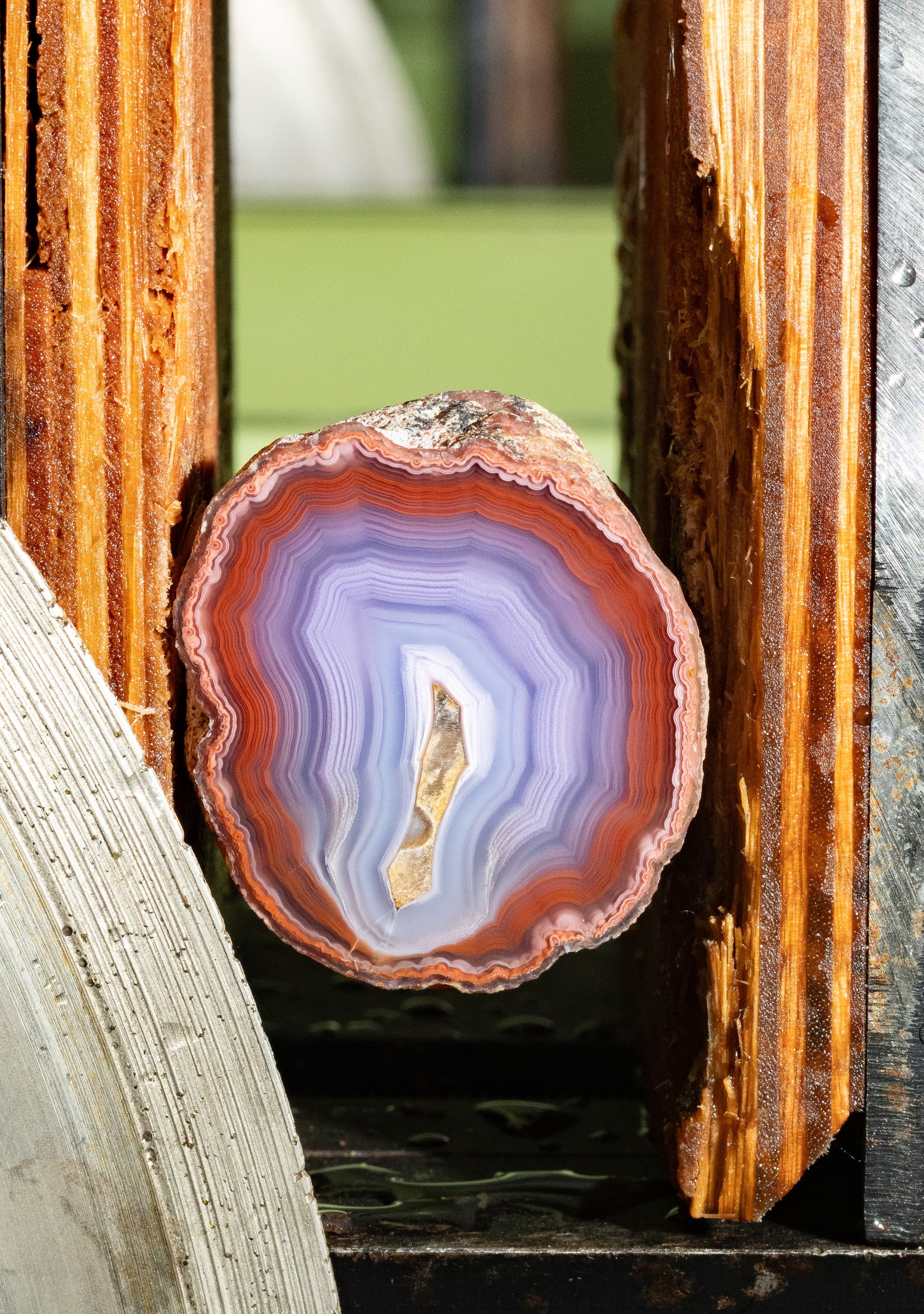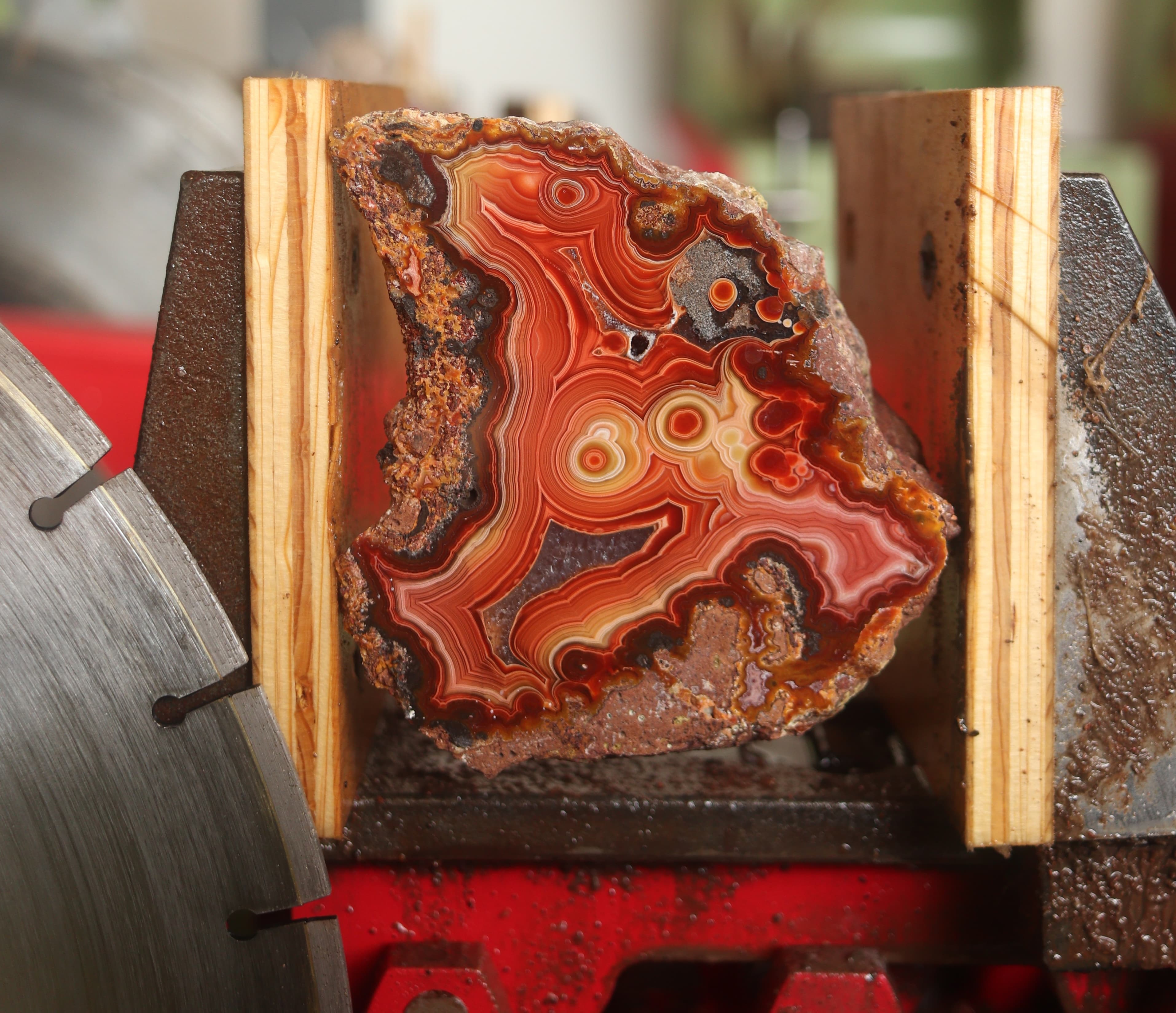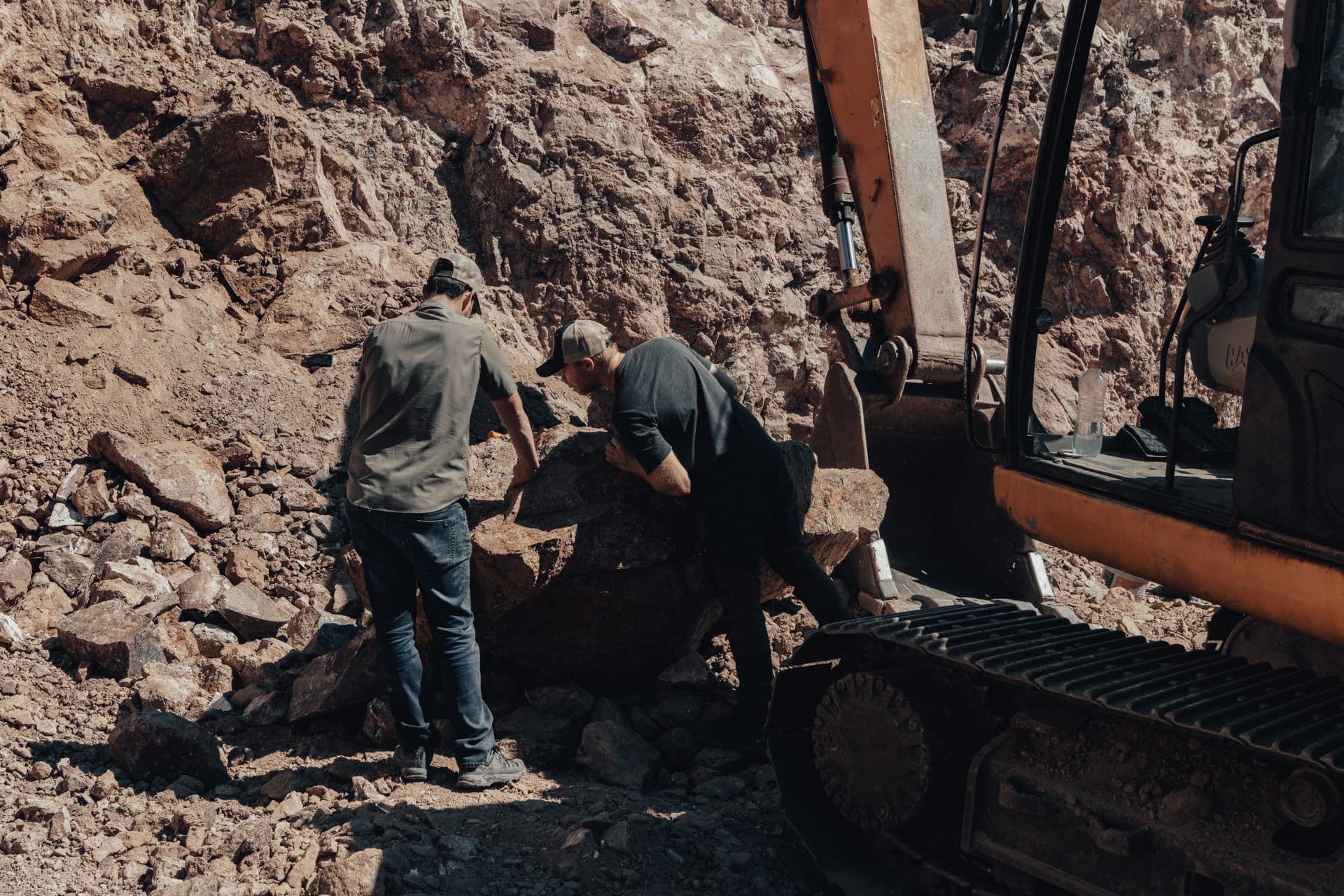








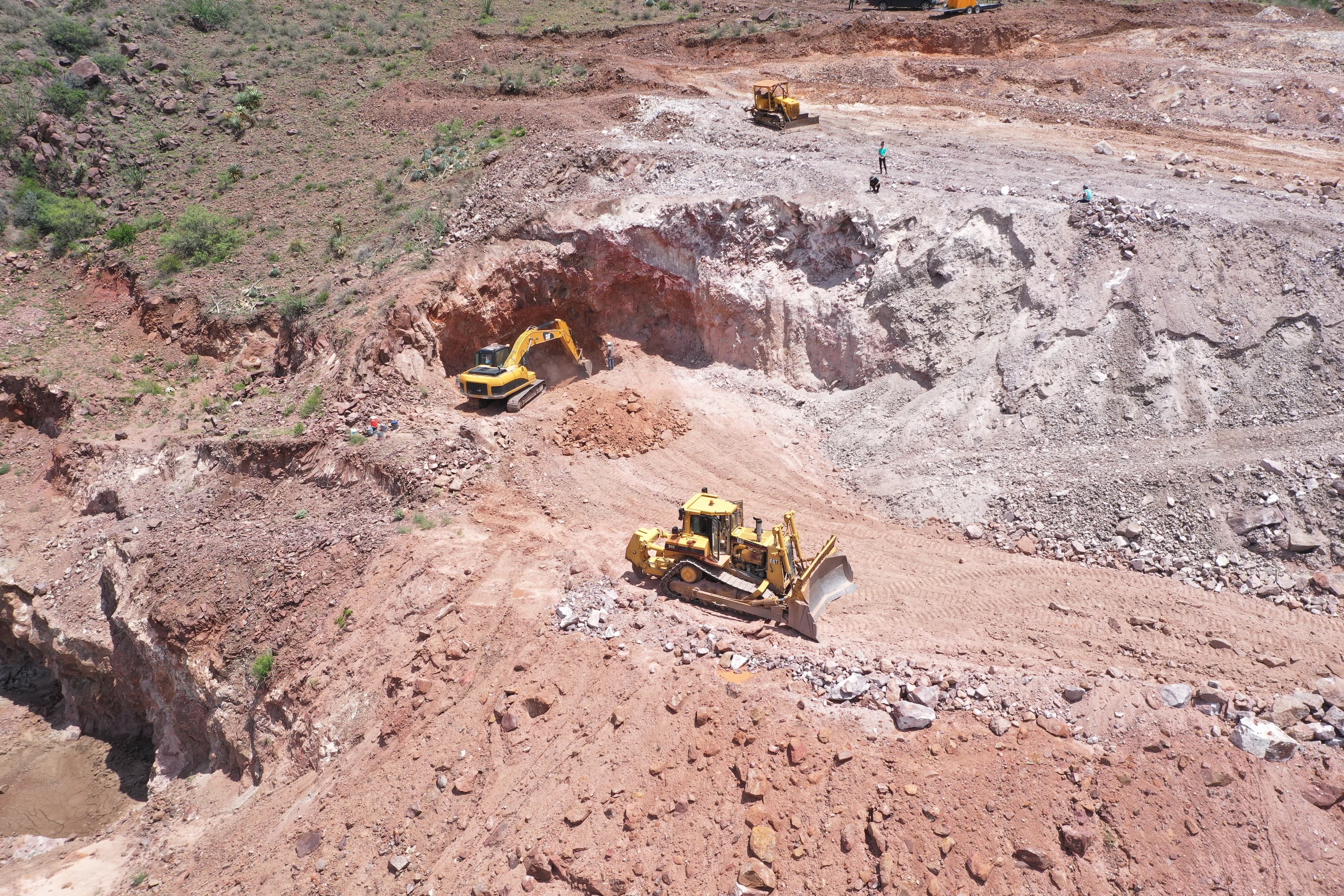
Agates are not found lying on the surface.
In volcanic regions where nodular agates occur, the color is sealed inside solid rock — completely hidden, with no indication of what lies beneath.
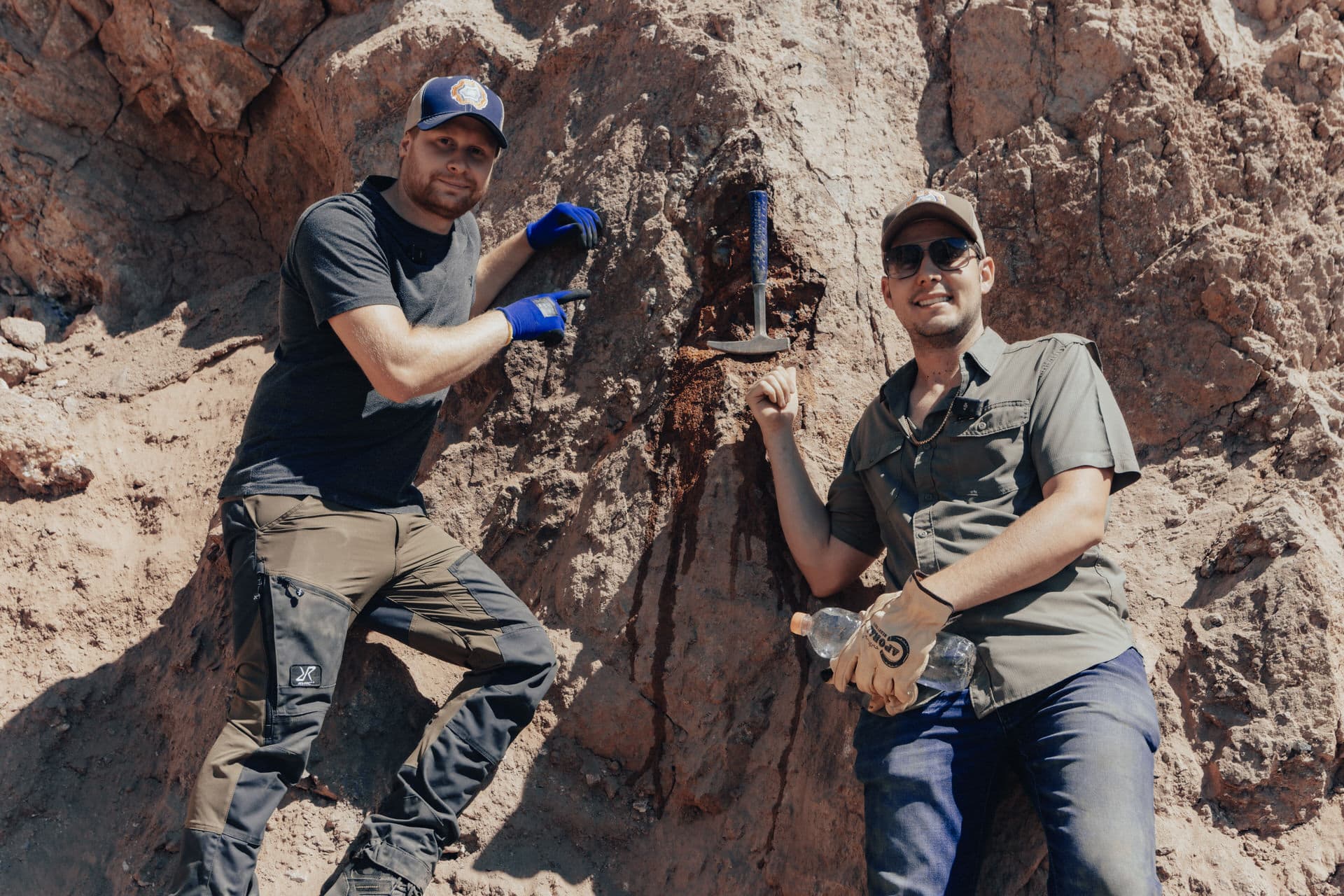
To reach them, hard stone must be removed first.
Where the Agates Form
Nodular agates develop inside gas cavities within volcanic flows. In northern Mexico, these cavities are often locked inside dense andesite — a fine-grained volcanic rock that is compact, abrasive, and extremely resistant to controlled breaking.
The cavities are sealed.
There are no visible signals.
No surface markings that guarantee what is inside.
Most exposed rock contains nothing at all.
Reaching agate-bearing zones requires removing large volumes of hard host rock simply to see what is there.
The Challenge of Andesite
Andesite does not split easily. It fractures irregularly and absorbs force unpredictably. In many deposits, agates are deeply embedded, making hand tools alone ineffective.
Heavy equipment is often required just to access the layers where nodules may exist. Excavators and hydraulic breakers are used carefully to:
Remove overlying material
Expose potential agate zones
Follow natural cooling fractures in the volcanic flow
Even then, progress is slow. Every movement must be controlled.
Once nodules begin to appear, machinery steps back. From that point forward, patience matters more than power.
Why Explosives Are Not an Option
In many types of mining, blasting is standard.
In agate recovery, it is avoided.
Shock waves travel through solid volcanic rock and can fracture agates internally, even if no surface damage is visible. Because agates are valued for intact banding and internal structure, preserving them requires minimizing vibration and uncontrolled force.
Extraction must follow natural weaknesses in the rock, not create artificial ones.
The Reality Few People See
What most people never witness is the scale of effort behind a single exceptional agate.
Thousands of nodules may be removed, cleaned, and cut before one stands out.
Many are solid or pale
Some contain fractures
Others show color but lack structure or balance
Only a small percentage reveal the depth, clarity, and preserved banding that define high collector quality.
There is no way to know until the stone is opened.
That uncertainty is part of the process.
Why It Matters
Understanding how agates are recovered changes perspective.
Their rarity is not only about how they form inside volcanic rock. It is also about how difficult they are to extract intact. Recovering nodular agates requires restraint, observation, and a willingness to move slowly through hard material with no guarantee of success.
For every exceptional agate, there is a long sequence of rock that did not contain one.
Finding color inside solid stone is never casual.
It takes time, effort, and patience.
And when a truly remarkable agate is finally revealed, it carries the weight of all the work that came before it.