







The rock that wears another’s face
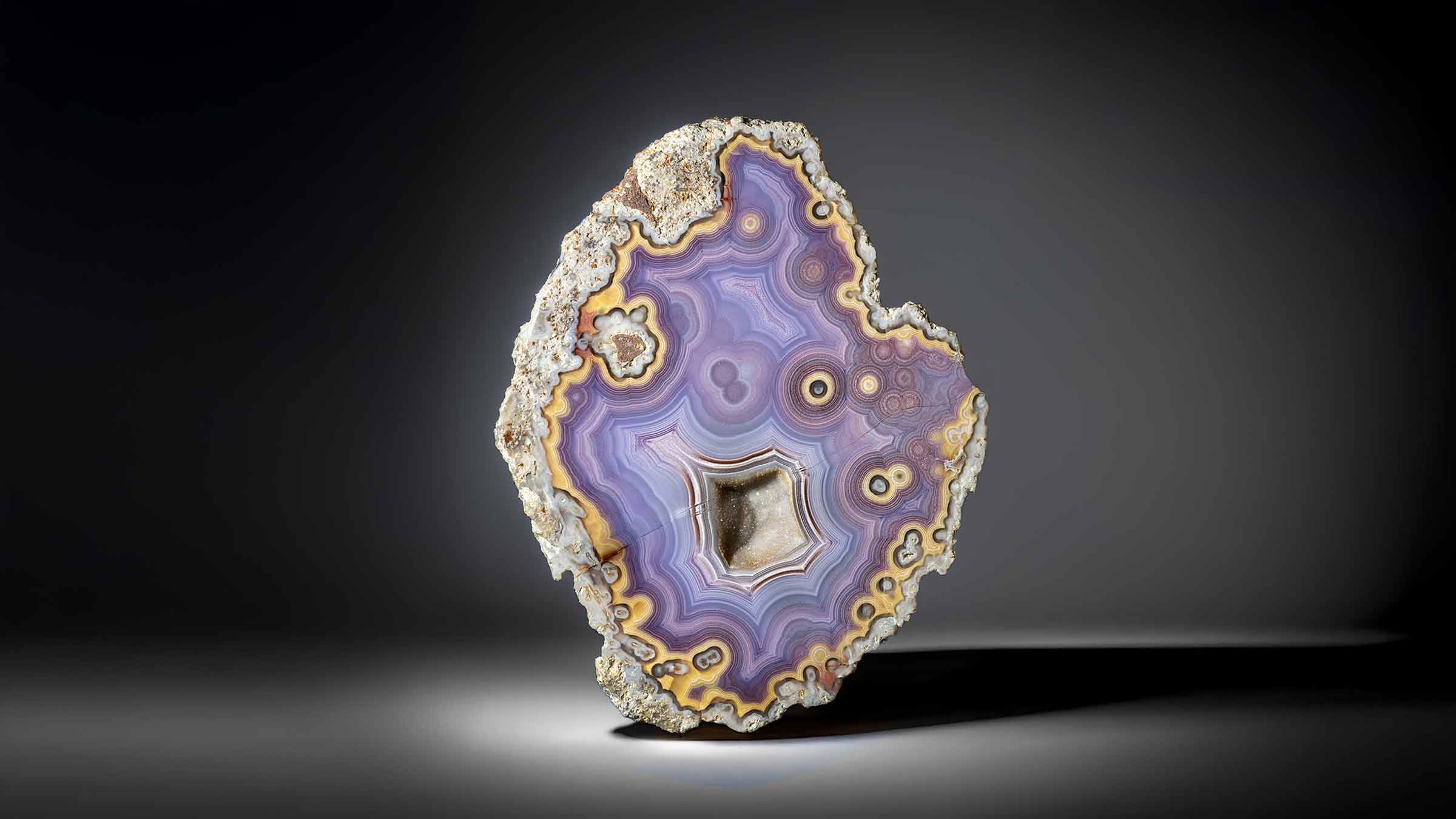
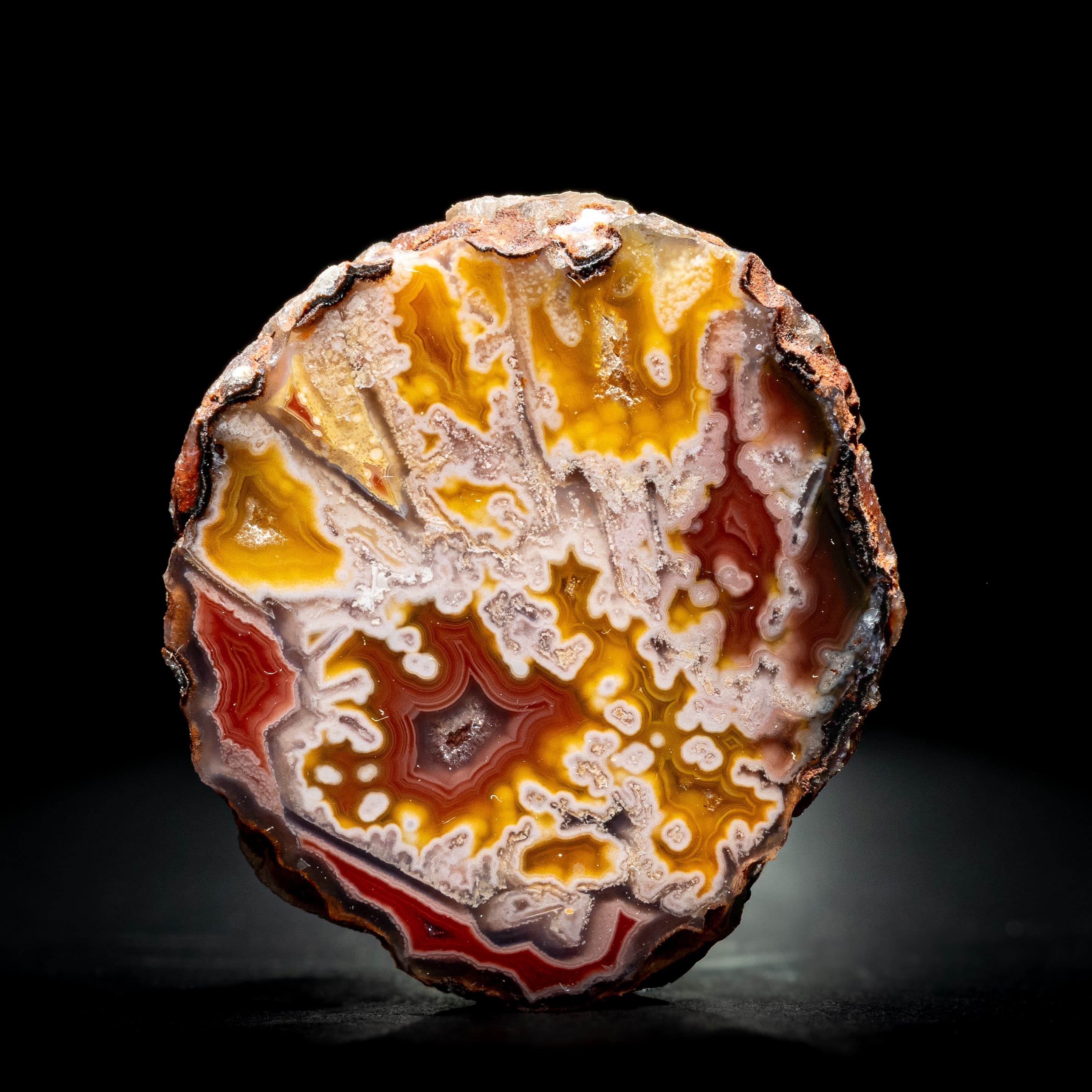
At first glance, Coyamito agate from northern Mexico already feels magical. Its fiery bands, deep caramel tones, and glowing chalcedony layers look alive. But sometimes — just sometimes — you’ll find something inside it that doesn’t belong.
A shape that looks like a crystal, but… isn’t.
Edges that form like calcite or aragonite, yet glow with agate’s silky translucence.
That’s when you’ve stumbled on something rare and extraordinary: a pseudomorph.
What exactly is a pseudomorph?
The word sounds complicated, but its meaning is simple:
“Pseudo” means false, and “morph” means form.
In other words, a pseudomorph is a mineral that has taken the shape of another.
One mineral forms first, then dissolves or gets replaced — but its shape remains, filled in by a new mineral.
Think of it like nature’s version of casting — the first mineral leaves behind a perfect mold, and another one quietly steps in to take its place.
In Coyamito agate, this transformation is not just beautiful — it’s breathtaking.
How it happens in Coyamito agate
Coyamito agate forms in ancient volcanic rock near Chihuahua, Mexico — a landscape shaped by intense heat, gas bubbles, and mineral-rich water. Inside these cavities, minerals like calcite or aragonite often grew first.
Later, silica-rich water seeped in and slowly replaced those original crystals with chalcedony — the microcrystalline quartz that forms agate.
Over thousands (sometimes millions) of years, the original crystal dissolved, leaving only its shape behind.
The result? An agate that looks like a crystal — but isn’t one anymore.
Why it’s so rare
Pseudomorphs are rare because they require the perfect sequence of events:
One mineral forms first — often something soluble, like calcite.
Silica-rich fluids enter the cavity, layer by layer.
Replacement happens slowly, preserving the original crystal’s shape while filling its volume with chalcedony.
The cavity seals off, trapping the transformation forever.
If any step goes wrong — the temperature’s too high, the flow too fast, or the chemistry off — the pseudomorph won’t form.
That’s why finding a Coyamito agate with preserved crystal shapes inside feels like discovering a secret chapter of Earth’s history.